Reference guide

Indiana Seasonal Pest Calendar: Month-by-Month Guide

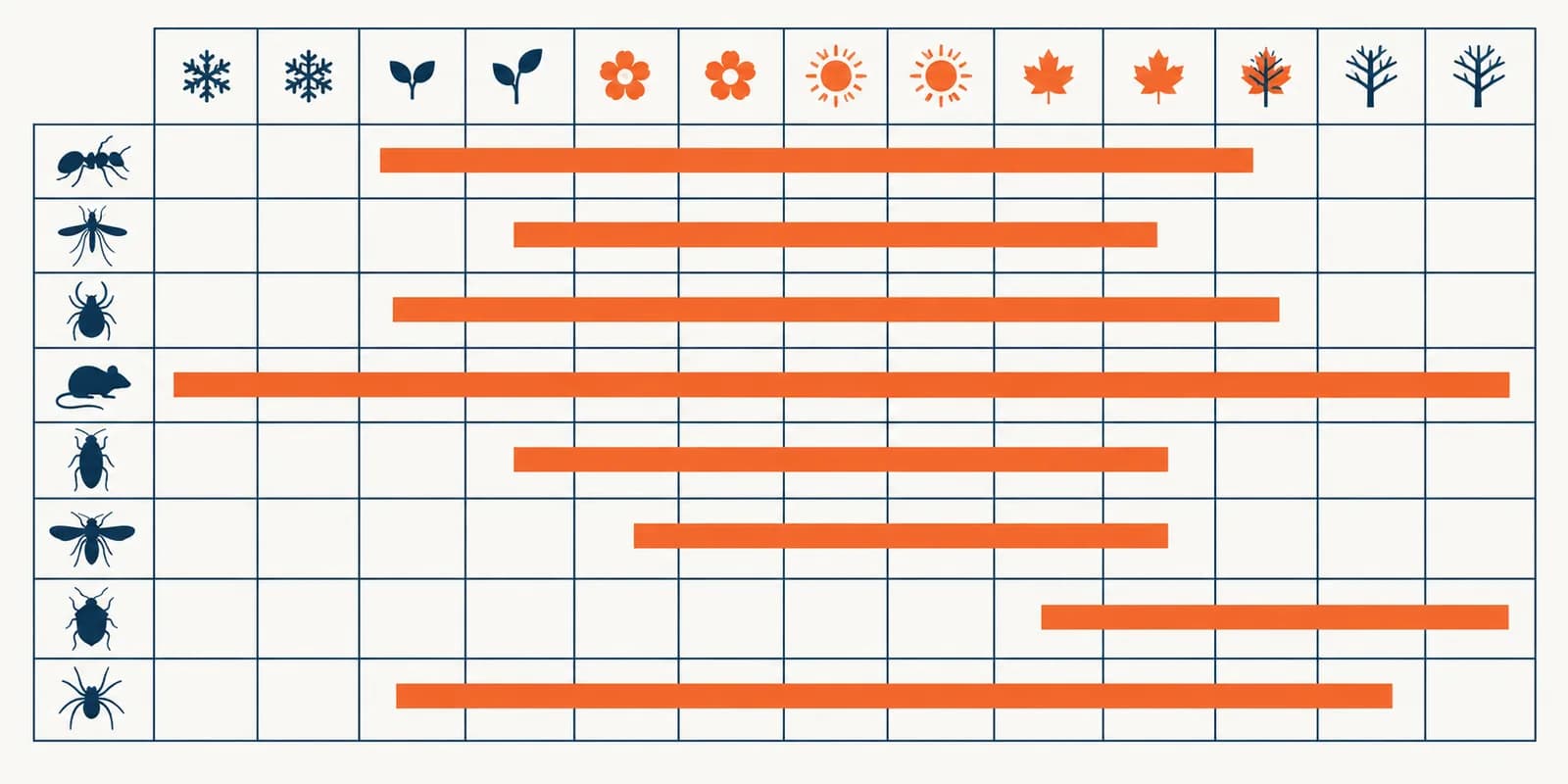
Nothing here is a surprise if you have lived through a few summers by the river. Pest pressure in Southern Indiana follows the Ohio River valley's humid summers, real winters, and river-bottom moisture, so most pests run a predictable cycle of spring wake-up, summer peak, a fall push indoors, and winter quiet. Bed bugs are the exception, because they travel with people rather than with weather, and they stay active year round. The table below gives the month-by-month picture for the Evansville area, pest by pest.

Flat twelve-month band chart showing when each pest is active through the year.

Quick-Reference Table: What Is Active Each Month

Ohio River valley weather drives this calendar: humid summers, real winters, river-bottom moisture.

MonthPest PressureWhat You Will NoticeWhat To Do
JanuaryIndoor rodents. Termites below frost line.Droppings, gnawed packaging.Seal pipe gaps.
FebruaryRodents indoors. Bed bugs year-round.Rust-colored spotting on sheets.Check mattress seams.
MarchAnt scouts. Termite swarms opening.First ants on counters after warm rain.Book spring service.
AprilTermite swarm peak. Ants indoors.Swarmers and shed wings, humid afternoons.Check crawlspaces.
MayWasp queens nesting. Ticks in yards and tree lines.Small starter nests.Check eaves.
JuneWasp nests growing. Mosquitoes ramping. Fleas on pets.Nests under eaves. Biting at dusk.Empty standing water.
JulyPeak mosquitoes. Large wasp colonies. Roaches indoors.Roaches near sinks.Clear gutters, fix leaks.
AugustMosquitoes and wasps high. Ants foraging.Ant trails to pet food.Store food sealed.
SeptemberYellowjackets scavenging sugar and meat (Purdue E-44). Mosquitoes tapering.Wasps at picnics and trash cans.Cover outdoor food.
OctoberClearest rodent month. Wasp colonies die at frost.Mice at foundations. Fields cut, nights below fifty. Spiders indoors.Seal entry points.
NovemberRodents building indoors. Termites below frost line.Scratching in walls. Spiders indoors.Check attic and crawlspace.
DecemberRodents established if gaps went unsealed.Travel raises bed bug exposure, not a season.Inspect luggage and bedding.

Winter (December to February): Indoor Pressure and Quiet Activity

The quiet months are not empty months. Pressure moves indoors and out of sight.

Rodents that got in during the October and November push are established by now. Winter is when homeowners hear them most clearly, because the house is quiet and they are pressed close to heat in walls and attics. Older housing stock around Evansville and Newburgh gives them more ways in. Scratching overhead in January is usually a fall arrival you are finally hearing. Read rodent control and exclusion, or see our rodent control service.

Termite colonies do not go dormant. They retreat below the frost line and keep feeding at a slower pace. No visible swarm activity in winter is not the same as no activity, and damage accumulates long before a spring swarm makes it obvious.

Bed bugs ignore the calendar. Holiday travel and houseguests make this window a real, if modest, source of introduction risk. They ride in on luggage and coats, and a heated home suits them in February as in July.
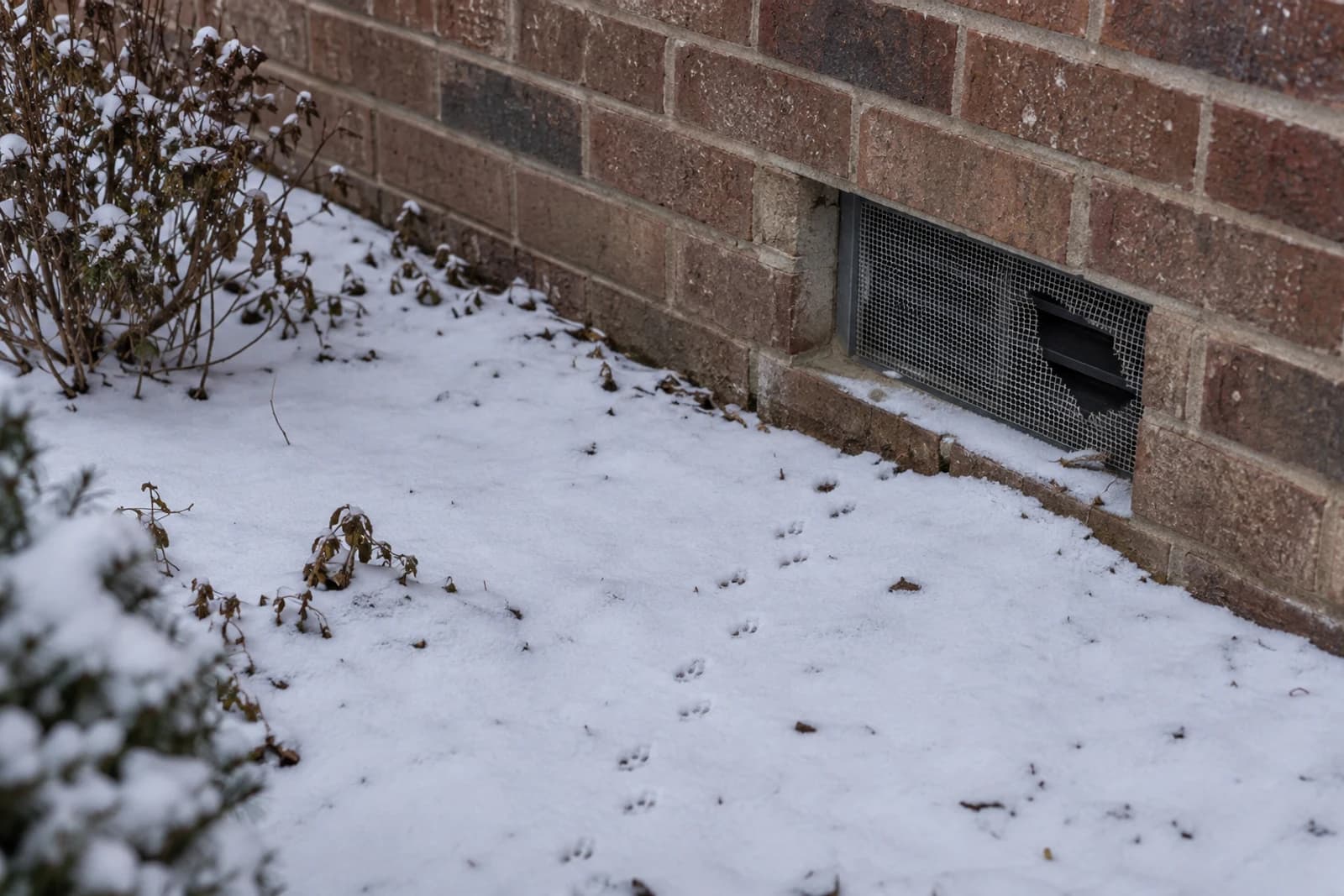
Small rodent tracks in light snow leading to a gap at a foundation vent.

Spring (March to May): Ant Scouts, Termite Swarms, and Ticks Waking Up

The first warm rain of the year is the trigger to watch. In the days after the ground warms and dries out from it, ant scouts start turning up on kitchen counters and around sinks, one at a time, hunting food and water. A single ant in March is not a fluke. It is the first visible pest event of the year, and it almost always shows up before a trail does. Catching it at the scout stage is easier than catching it later. See ant control for how we handle it.

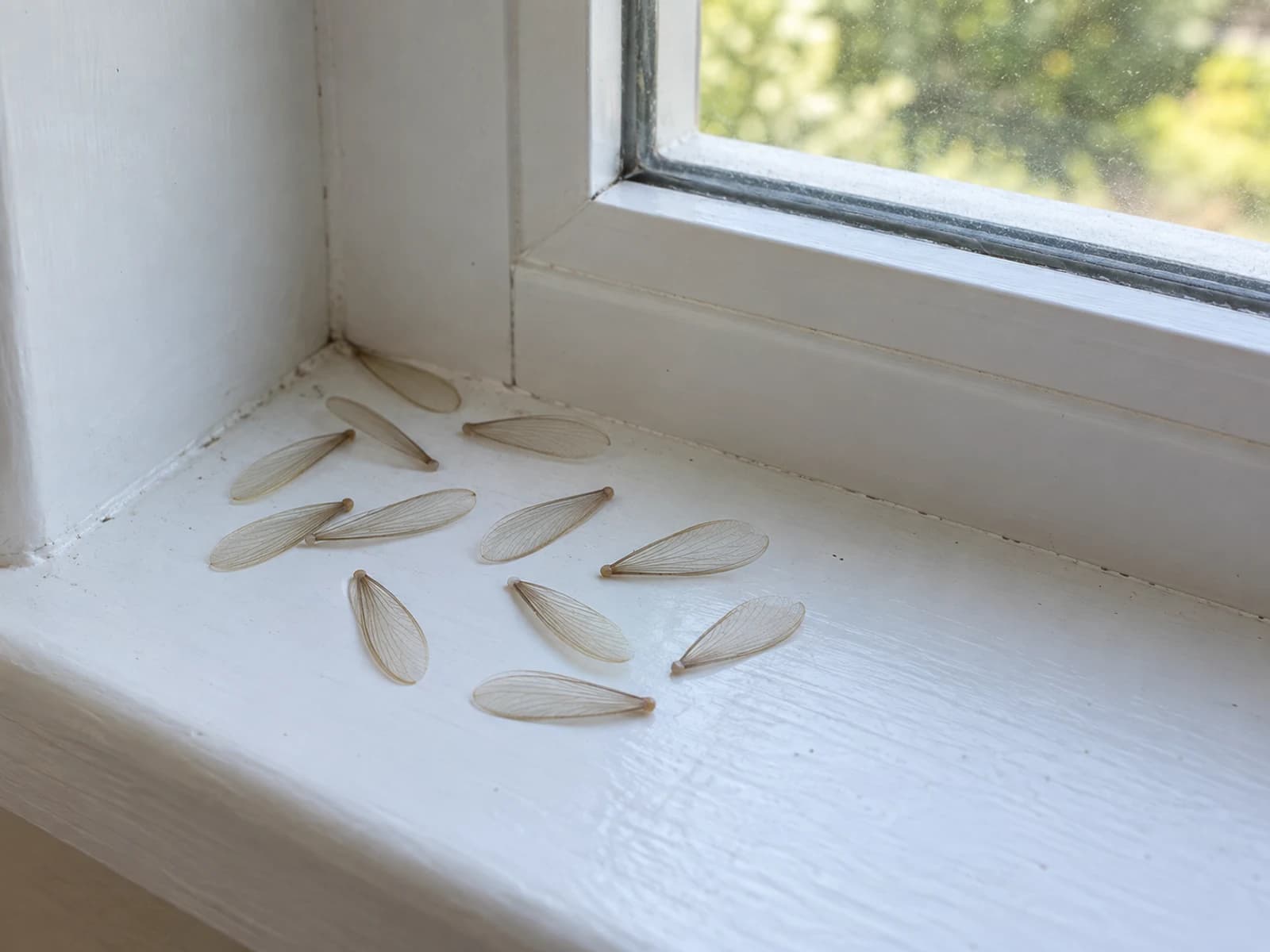
Termite swarm season runs through spring and peaks in April. Swarms come on warm humid afternoons after rain, which the Ohio River valley supplies in quantity. A swarm near the foundation, or a scatter of discarded wings on a windowsill, is the clearest above-ground termite sign you will get all year. Nothing else on this calendar announces itself that plainly, and it is worth acting on, because the colony was there long before the swarm was. Start with termite control and prevention, or book our termite control service, which opens with an inspection.

Ticks become active as vegetation comes back. By May, homeowners around Boonville and Mount Vernon are finding them after yard work. Ticks wait on grass tips and low brush and transfer when something brushes past, so contact happens at edges: where mowed lawn meets tall grass, along brush piles, and down a tree line. If your property has that kind of edge, flea and tick control covers it.

Shed termite swarmer wings on an interior window sill in spring.

Summer (June to August): Wasps, Mosquitoes, and Roaches at Their Worst

Wasps build through June, and nests reach full size by mid-summer. What a homeowner actually sees is the nest: under an eave, in a shed corner, or above an outdoor eating area. What was a starter nest the size of a golf ball in May is a working colony by July, with steady traffic in and out of it.

Mosquitoes own the humid stretch of summer. The mechanism is worth knowing, because it explains the schedule. Mosquitoes breed in standing water, and the cycle from egg to biting adult runs roughly three weeks. Every rain refills the buckets, tarps, plant saucers, clogged gutters, and low spots in the yard, and about three weeks later there is a new generation working the yard at dusk. That is why treatment runs on a repeating schedule rather than as a one-time service call. Tipping out anything holding water after a rain is worth doing yourself. For the rest, see mosquito, flea, and tick control or our seasonal mosquito treatments.

Roaches stay active indoors through summer, drawn to air conditioning and kitchen moisture while Ohio River valley humidity keeps the pressure on outside. They show up at night near sinks, dishwashers, and the warm gap behind the refrigerator. Spraying the few you see does not reach the ones you do not.

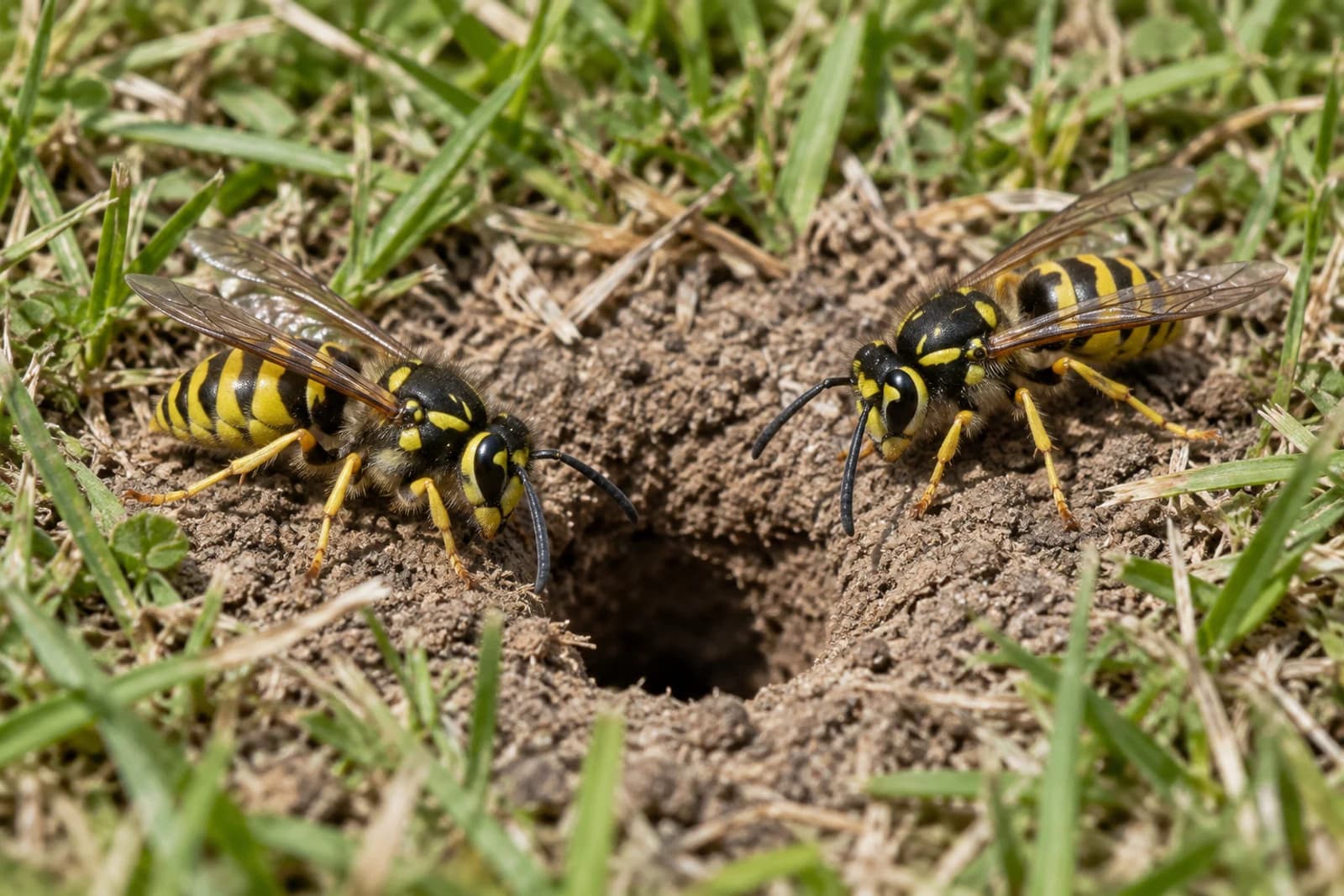
Yellowjackets at a ground nest entrance in a summer lawn.

Fall (September to November): The Push Indoors

Mice and rats move toward foundations in October, and it happens fast. As fields come down and nights drop below fifty degrees, rodents lose their cover and head for warm buildings. This is the sharpest single shift on the whole calendar, not a gradual drift. The timing that matters, then, is late September into early October, ahead of the cutting rather than after it. Older foundations around Washington and Jasper give rodents more to work with once they arrive.

Yellowjackets scavenge for sugar or meat in late summer and fall, which is why they turn up at picnics, trash cans, and outdoor eating areas (Purdue Extension E-44). Colonies peak late in the season and can run to a few thousand workers by this point.

Wasp colonies die off with the first hard frost. Social wasp colonies are annual, lasting one season only, so the nest under the eave this fall will not be reused next spring. Before that frost arrives, a stray wasp can still turn up indoors looking for a place to overwinter.

Spiders become more visible indoors in fall as they seek shelter. That is normal seasonal behavior and not, on its own, a sign of an infestation. Roaches carry on as well, because a heated house keeps them going once the weather turns, so cockroach control stays a fall subject rather than a summer one.

Bed bugs do not wait for a season, and the inspection is free. Call (812) 401-1028.

Harvested cornfield edge behind a Southern Indiana subdivision in October.

The One Exception: Bed Bugs Run Year Round

Bed bugs are an introduced pest, not a seasonal one. Every other pest on this calendar answers to temperature and rainfall. Bed bugs answer to travel. They are hitchhikers, riding in on luggage, used furniture, and overnight guests. That is why Indiana has no bed bug season the way it has a mosquito season. A home gets them when something carries them through the door, in July or in January.

Travel-heavy stretches raise exposure, not activity. Summer vacations and holiday visiting put more suitcases in hotel rooms and more guest beds in use, so the odds of an introduction climb. The bugs are doing nothing different. Only the number of available rides changes, not their life cycle.

What to look for, in any month. Rust-colored spotting along mattress seams and box spring edges is the most common first evidence. Small bite clusters are the other early cue.

They do not care whether a house is clean. Clean homes get them and messy homes get them, because they arrive as passengers. If you think you have bed bugs, do not wait. Our bed bug control and heat treatment page covers what comes next.

If a month on this calendar matches what you are seeing right now, do not wait it out. Call (812) 401-1028. The inspection is free.

Using This Calendar for Your Home or Business

A restaurant, an apartment complex, or an office runs on the same calendar a house does. Spring brings ants and termite swarmers, summer brings wasps and mosquitoes, and fall brings the rodent push indoors. The difference is scale, more units and more ground to watch, not a different set of pests on a different schedule.

That scale is exactly why a recurring schedule tuned to this calendar beats a reactive one. On a property with many units, a reactive call means the problem is already established in more than one of them. Getting ahead of each season keeps the work small. Our commercial pest control programs are built around that timing, and you can ask us to walk your property before the next season turns.

Getting ahead of the next season is cheaper than reacting to it. Plans start at $35 a month, most homes between $35 and $100, and callbacks between scheduled visits are free on a quarterly or monthly plan. Call (812) 401-1028.

Common Questions About Indiana Pest Seasons

When do termites actually swarm around here?

Spring, after warm rain. What matters more: a swarm means an established colony is already nearby, not one arriving. Do not just sweep up the wings. Get the structure inspected.

Why did ants suddenly show up in my kitchen?

Suddenly is the wrong word. The colony was there before you saw anything. A scout found food or water indoors and left a trail for the rest.

Are bed bugs really active all year, even in winter?

Yes. They move with people rather than weather. Winter cold never reaches them, because they live in the heated part of the building with you.

When should I start pest control for the year?

Most homes do well starting in spring, ahead of the ant and termite wake-up. But active pressure beats the calendar, so call whenever you see it. Inspections and quotes are free.

When do mice and rats start coming inside?

Fall. The work that matters is sealing entry points, and sealing is easier and cheaper before they are inside than after. That makes late September the moment, not November.

Why are there suddenly wasps all over my picnic table in September?

Purdue Extension E-44 documents that yellowjackets scavenge for sugar or meat in late summer and fall, turning up at picnics and outdoor events. The colony peaks late in its one-year cycle.

Zach Krietemeyer, owner of Alpha-Dog Pest Control.

Zach Krietemeyer

Owner

Keep This Page for the Season Ahead

Bookmark it. Check what month it is, read that month, and call if something on the list is already happening at your place.

Built from our own route. These months reflect what Alpha-Dog sees on the ground in Southern Indiana, not a generic national pattern.

Reach the office at (812) 401-1028. Alpha-Dog Pest Control has worked the Evansville area since 2020, from Evansville and Newburgh. Tell us which month on this page matches what you are seeing, and we will take it from there.

Get a free quoteCall (812) 401-1028Call now

Free QuoteCall NowPhones answered after hours