Technician running a flashlight along the foundation sill plate of a brick ranch home.

Alpha-Dog Pest Control

Termite Control and Prevention in Southern Indiana

Termite control in Evansville and Southern Indiana means Eastern subterranean termites, the termite species across the state. They build mud tubes from soil into wood. Those tubes are how they get in, and the clearest sign you will see. They work quietly, so structural damage can add up before anyone notices. At Alpha-Dog, we inspect first, show you exactly what we found, then quote in writing. When the work is done, an independent canine team from K9 Detections can verify it, the same outside proof we use on bed bug jobs.Termite control in Evansville and Southern Indiana means Eastern subterranean termites, the termite species across the state.

Licensed and insured
Licensed and insuredIndiana 7A and 7B licensedFree inspection and written quoteIndependent canine verification on bed bug and termite work

How to Know If You Have Termites

Most homeowners find termites by accident. Here is what you can check today.

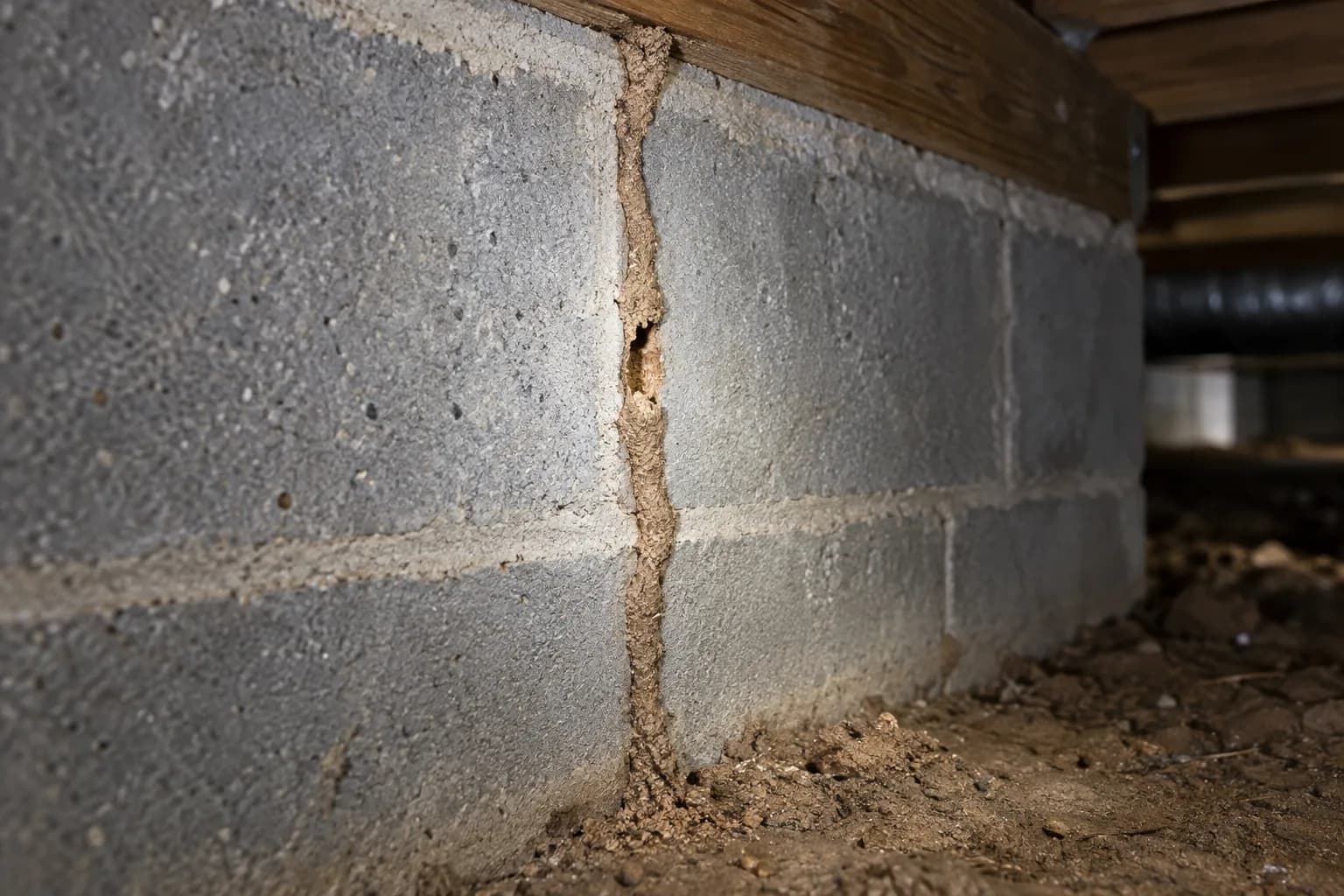
Mud tubes. Pencil-width, earth-colored tunnels running up a foundation wall, a crawl space pier, or a floor joist. This is the clearest sign there is. Walk the foundation perimeter, get a light into the crawl space, and pull the stored boxes off the garage wall. Here is what to do if you find mud tubes.

The break-the-tube test. Break open a short section of tube with a screwdriver. If it is repaired within a few days, the colony is active. If it stays open, the tube may be old.

Hollow-sounding wood. Tap along baseboards, window sills, and door frames with a screwdriver handle. Termites eat wood from the inside, so the surface can still look fine.

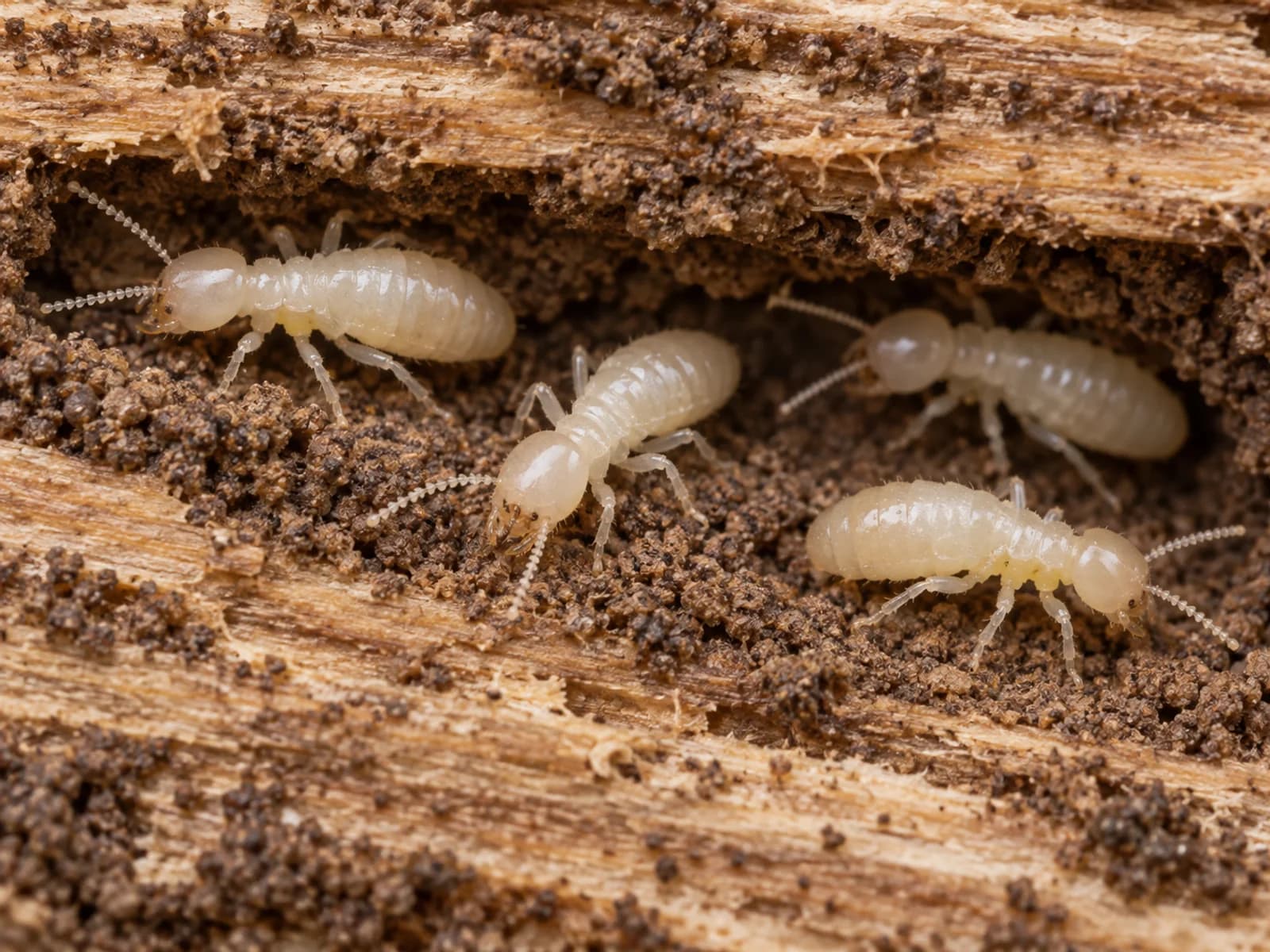
Galleries. When wood breaks open, subterranean termite damage runs with the grain and the channels are packed with soil. That packed soil is what separates it from rot or other wood damage.

Soft floors and rippled paint. Spots that sag or feel spongy underfoot. Paint that bubbles or ripples like water got behind it.

Spring swarmers and discarded wings. Piles of small wings, all the same length, on a windowsill, near a door, or by a light. This is usually the first thing anyone notices.

Any one of these is worth a closer look. Our guide on how to identify termite damage walks through each sign in detail, and how do I know if I have termites answers it in about a minute.

Pencil-width termite mud tube climbing a concrete block foundation to a sill plate.

Treatment Options, Explained Honestly

Two methods do most of the termite work around here. Neither one wins every job.

Liquid termiticide puts a treated barrier in the soil around and under the structure. Termites have to cross it to get in. It holds for years. The upfront cost is higher, and liquid work typically carries an annual renewal to keep the warranty active. That renewal is a real part of the method, and you should hear it before you decide, not after.

Bait stations go in the ground around the structure and get checked on a monitoring schedule. Worker termites feed, carry the active ingredient back, and pass it through the colony. That can eliminate the colony itself. The upfront cost is lower. The tradeoff is that baiting depends on monitoring rather than a barrier already sitting in the soil.

Here is the part a sales pitch usually leaves out. University of Florida research published in 2024 found that liquid termiticides have limited impact on large, established colonies, while baiting can eliminate a colony outright. Purdue Extension and University of Kentucky entomology cover the same ground.

That does not make liquid the wrong call. A barrier is the right answer for plenty of structures. Colony elimination is the right answer for others. Some properties get both, one holding the foundation line and one working on the colony behind it.

Treating the perimeter does not fix a colony problem. The method has to match what the inspection actually found. So we look at the crawlspace, the sill plate, the mud tubes, and the moisture points first. Then we tell you what we saw and what we would do about it. The recommendation comes from your inspection, not from one system we sell to everybody.

We break both methods down further in termite treatment options, and put them head to head in bait stations vs liquid treatment. Our termite control service walks through how a job runs from the first visit on.

The inspection is free, and independent canine verification is available on termite work. No other company in this market offers that. Call (812) 401-1028.

Technician trenching soil along a foundation for a liquid termite barrier treatment.

Prevention and the Moisture Connection

Subterranean termites live in the soil. They need moisture and a path from soil to wood. Take away either one and you have done most of the prevention available to a homeowner. Nothing makes a house termite-proof, but everything below is a version of that one idea.

Start with wood-to-soil contact. Deck posts, fence sections meeting the siding, wooden steps, lattice, form boards left buried after a pour, firewood stacked against the house. Any wood touching soil is a direct bridge, and it skips the mud tube entirely. That is why moisture and termite risk belong on the same list.

Then dry the foundation line. Leaking hose bibs. Condensation lines draining right at the wall. Crawl space humidity. Ground that stays soft two days after a rain.

Gutters and grading are the checkable version of that. Gutters dumping at the foundation, downspouts with no extensions, soil graded toward the house instead of away. Walk the perimeter during the next hard rain and you will see it.

Keep mulch a few inches deep and pulled back from the siding. Deep mulch against the wall bridges the foundation and holds moisture against it.

The annual inspection is the highest-value habit here, and in relative terms it costs the least of anything on this list. Our termite inspection checklist covers what you can check yourself, and how often to inspect covers timing.

Insurance note: homeowners insurance generally does not cover termite damage, because insurers treat it as preventable maintenance rather than sudden accidental loss. Check your own policy and read are termites covered by insurance.

The key is consistency. One inspection a year catches what a homeowner walking past never will.

What Termite Service Costs and How We Quote It

Most companies around here publish nothing about price. We would rather show you the landscape.

Across the industry, termite work generally runs about $250 to $1,000 for basic treatment. Treating an active infestation generally runs about $1,200 to $3,500 and up. Those figures are market research on termite work in general, not an Alpha-Dog quote. Many companies also price by the linear foot of foundation, which is part of why two quotes on the same street can look nothing alike. For more detail, see our page on termite treatment cost in Indiana.

What moves the number on your house is straightforward enough. The size of the structure and the linear footage of foundation set the baseline. Whether the house sits on a slab or over a crawl space changes both the method and the labor. How accessible the foundation line is matters too, because ground that is blocked by decking, landscaping, or stored material takes longer to treat properly. Then there is the method the inspection calls for, and whether termites are active or this is preventive work.

Here is what we can tell you for certain. Every termite job starts with an inspection. The inspection is free. We show you what we found first, on your property, before any number gets discussed. Then you get a written quote. Nothing starts until you have that quote in hand.

That sequence matters. You should never hear a price before you have seen the evidence behind it.

Termite work is not covered by the 30-day warranty, which applies to bed bug treatments. What it carries instead is outside proof: K9 Detections runs a termite dog we have access to, so the verdict on whether the colony is finished does not have to be ours. Ongoing protection runs on a schedule, and callbacks between visits are free on a quarterly or monthly plan.

Work in the field

Technician inspecting termite activity along the foundation of an Evansville home.
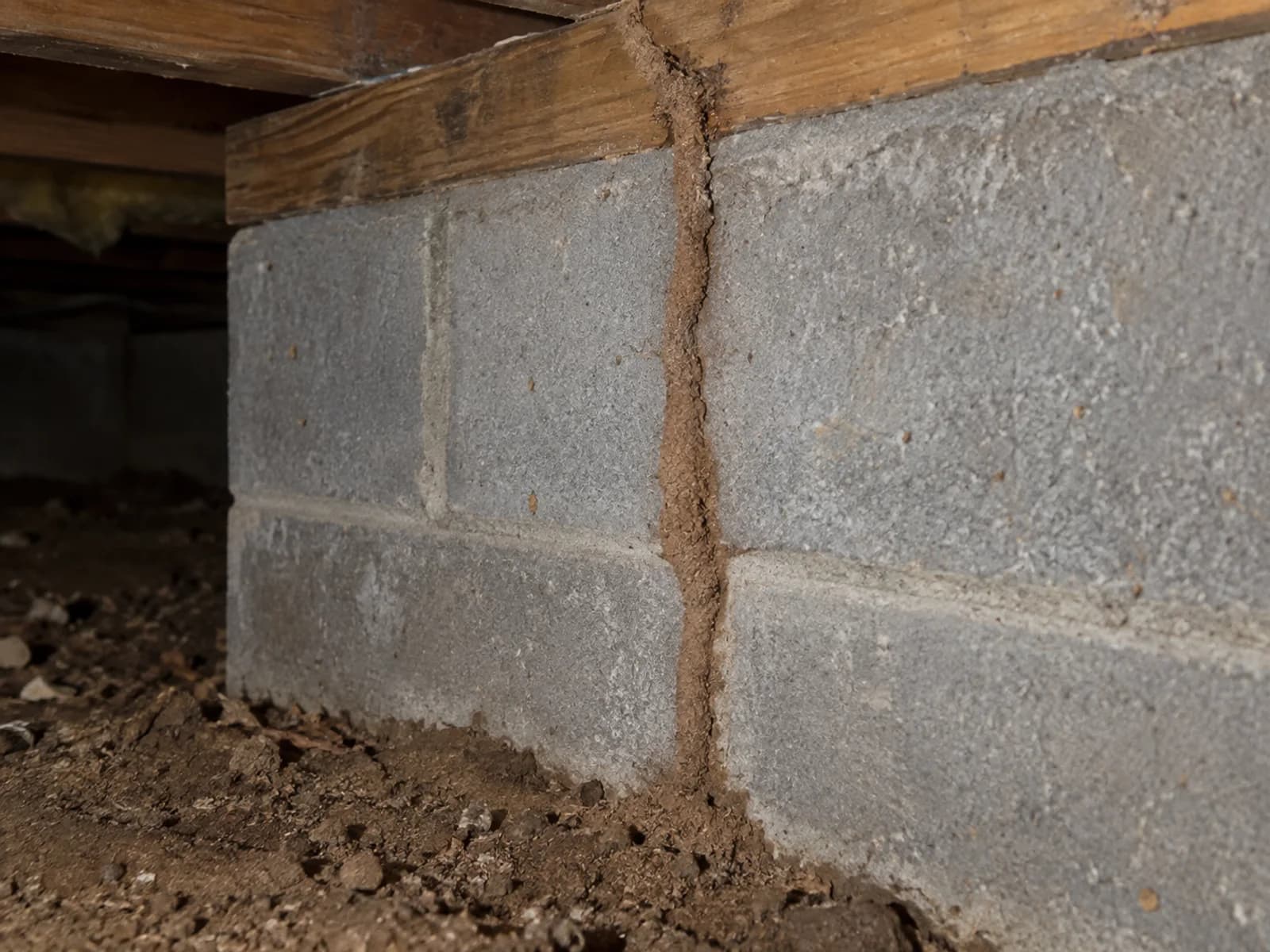
Mud tube running up an interior block foundation wall in a crawl space.

Free

Inspection before the written quote

Written

Scope and price before work starts

Local

A small team serving the Evansville area

Since 2020

Serving Southern Indiana

Where We Work

We work out of two locations, Evansville and Newburgh, and serve homeowners and businesses across the Evansville metro and Southern Indiana:

EvansvilleVanderburgh County
NewburghWarrick County
BoonvilleWarrick County
Mount VernonPosey County
PrincetonGibson County
JasperDubois County
WashingtonDaviess County
Santa ClausSpencer County
BloomingtonMonroe County
Henderson, KYHenderson County, KY

Frequently Asked Questions

Are termites actually a problem around here?

Yes. Eastern subterranean termites are established across Indiana, and Southern Indiana suits them: humidity, clay soils, and older housing stock.

How often should I get an inspection?

Once a year is the standard recommendation. Go more often if you have had activity before, or known moisture or wood-to-soil contact issues.

Will my homeowners insurance cover this?

Generally no. Insurers treat termite damage as preventable maintenance rather than sudden accidental loss, so most policies exclude it. Check your own policy rather than taking a website's word for it.

Bait or liquid, which one do I need?

It depends on the structure and on what the inspection finds. Liquid builds a treated soil barrier. Bait can eliminate the colony itself. Neither is better everywhere, which is why we inspect first.

Do I have termites or just ants?

Termite swarmers have straight antennae, two equal-length pairs of wings, and a thick waist with no pinch. Flying ants have elbowed antennae, a pinched waist, and front wings longer than the back pair. Discarded equal-length wings on a sill usually mean termites.

What does a termite job cost?

It depends on structure size, foundation footage, access, and method. Industry research puts basic termite treatment around $250 to $1,000, and active infestation work from about $1,200 to $3,500 and up. Those are market figures, not an Alpha-Dog quote. Your inspection is free and the quote comes in writing.

Start With a Free Inspection

The termite inspection is free. We show you what we found before any quote. The quote comes in writing.

Zach holds the 7A supervisory and 7B termite licenses. Our technicians work under his license, certified through the Office of the Indiana State Chemist at Purdue University.

The owner still tries to meet every new customer. On termite work he wants to see the foundation line with his own eyes. When he cannot get there, it is Dylan or one of the crew, and they work the same way.

The proof on termite work comes from outside. An independent canine team can verify the colony is finished, and ongoing protection runs on a schedule where callbacks between visits are free on a quarterly or monthly plan.

If you think you have termites, do not wait. Call (812) 401-1028.

Get a free quoteCall (812) 401-1028Call now

Free QuoteCall NowPhones answered after hours