
Alpha-Dog Pest Control
Flea & Tick Control in Evansville and Southern Indiana
Fleas live on the pet, in carpet and pet bedding, and in shaded parts of the yard. Miss one and they come back. We treat all three together, then time the follow-up to the hatch, because most of them are eggs and pupae you never see. Ticks wait in the woodline and leaf litter, not the mowed lawn. Fleas rarely finish in one pass, so the protection that matters is the schedule, and callbacks between scheduled visits are free on a quarterly or monthly plan.Fleas live on the pet, in carpet and pet bedding, and in shaded parts of the yard.
Licensed and insured
Free
Inspection before the written quote
Written
Scope and price before work starts
Local
A small team serving the Evansville area
Since 2020
Serving Southern Indiana
Why Fleas Keep Coming Back
- 1
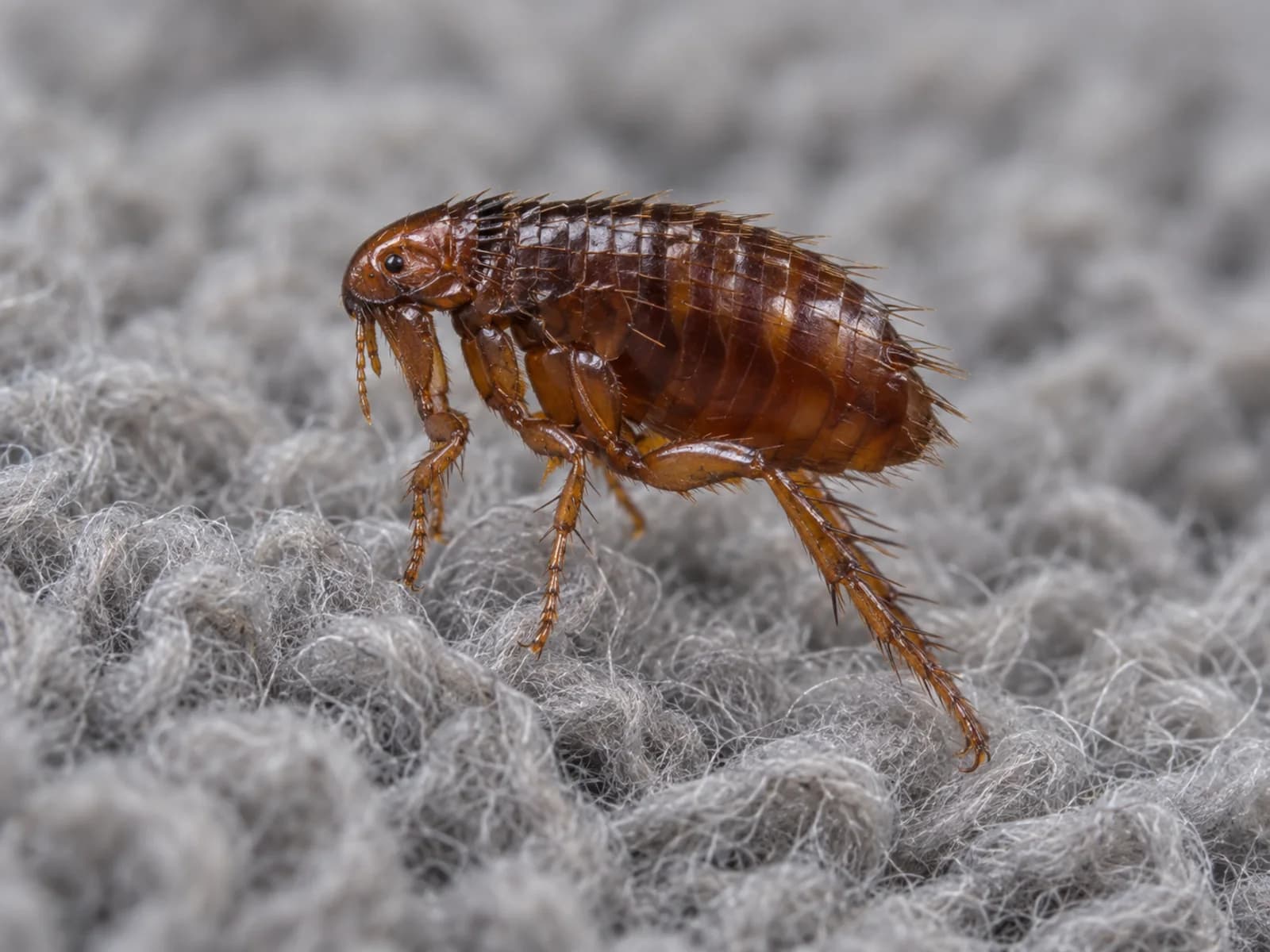
The fleas you see are the small part.
Adults riding on the pet are roughly 1 to 5 percent of the population. The rest is eggs, larvae, and pupae you never lay eyes on. They sit down in carpet fibers, in pet bedding, in the seam where carpet meets the baseboard, and in shaded soil outside. That ratio is the whole story.
- 2
Pupae are the hard part.
A flea inside its cocoon is protected and patient. It can wait months for a host to walk past, then hatch long after the house looks clear.
- 3
So knocking down the adults reads like a fix for about a week.
Treat one front and the floor goes quiet. Then the next batch hatches. People keep seeing fleas for weeks after a treatment and decide it failed. What actually happened is narrower than that. The treatment reached one stage of the life cycle in one place. The rest of the population was somewhere else.
- 4
None of this is about housekeeping.
Fleas ride in on your dog or cat, on a visitor's pet, or on wildlife living under the deck or the porch. A clean floor is not a defense, and a messy one is not the cause.
- 5
The rebound is a schedule, not a failure.
Once you can see the schedule, you can plan the work around it.
Signs of Fleas and Ticks
- 1
Start with the dog.
Constant scratching, chewing at the base of the tail, restlessness at night. Part the coat there and look at the skin.
- 2
Flea dirt settles the question.
It looks like ground pepper against the skin, and most people read it as ordinary dirt. Comb some onto a paper towel and wet the towel. Flea dirt turns rust red and bleeds a small halo into the paper, because it is digested blood. Yard dirt stays brown or grey. That test takes a minute.
- 3
People notice the bites low.
Fleas bite around the ankles and lower legs. You may also see them jump when you cross a carpet or step onto shaded ground.
- 4
Ticks turn up after the work is finished.
On you after mowing or clearing brush, or on the dog coming in off the woodline.
- 5
Ticks do not wander the middle of a mowed lawn.
They wait at the edge of tall grass, in brush, and in leaf litter, where the ground stays damp and shaded. Both pests run on a season, and the Indiana pest calendar shows when pressure climbs.
- 6
Some ticks in southern Indiana carry disease.
Questions about a bite belong with your doctor or your veterinarian.
Why DIY and Single-Front Fixes Fall Short
- 1
Treating the pet alone leaves most of the problem in the house.
Whatever your vet has your dog or cat on is doing real work. It cannot reach the eggs already down in the carpet or the population living in the yard.
- 2
Foggers and bombs are the DIY fix that fails most often.
A fogger treats the air in the middle of a room. That is not where fleas are. The mist settles on open floor and never gets under the couch, under the bed, or into the edge where carpet meets baseboard. The push drives fleas deeper into the fibers, further from anything applied later.
- 3
A yard spray on its own has the same blind spot in reverse.
It works the outside while the interior population rides back in on the pet every evening. That is why we run fleas and ticks as coordinated mosquito, flea and tick control instead of a lawn job.
- 4
Pupae are why a one-time service call is not the plan.
Nothing applied on the day of a treatment reaches a flea sealed inside its cocoon.
- 5
So the honest answer is three fronts at once.
The pet, the interior, and the yard, coordinated with whatever your vet already has in place, plus a follow-up timed to the hatch. The key is consistency.
The Real Treatment Process
- 1
1. Inspect the whole job.
We start where the pet sleeps, then follow where it goes outside. Shaded soil and mulch beds. The crawl space or the underside of a deck where wildlife travels. The woodline edge. Zach still likes to take the first visit himself. He wants to see the problem with his own eyes and hear what you are dealing with in your own words, because that is how the job gets scoped right. When he cannot get there, it is Dylan or one of the crew.
- 2
2. Tell you the prep honestly.
Vacuum thoroughly before we arrive. Run your bedding and the pet bedding through a hot wash. The reason matters more than the instruction: vacuuming pulls pupae up out of the carpet fibers, where nothing we apply can reach them. That is not a chore list. It is us being straight about what makes the work land.
- 3
3. Treat the interior where the population actually lives.
Carpet, along the baseboards, under and around the furniture, and the pet's resting areas. That is the ground the eggs and larvae drop into.
- 4
4. Treat the yard where fleas survive.
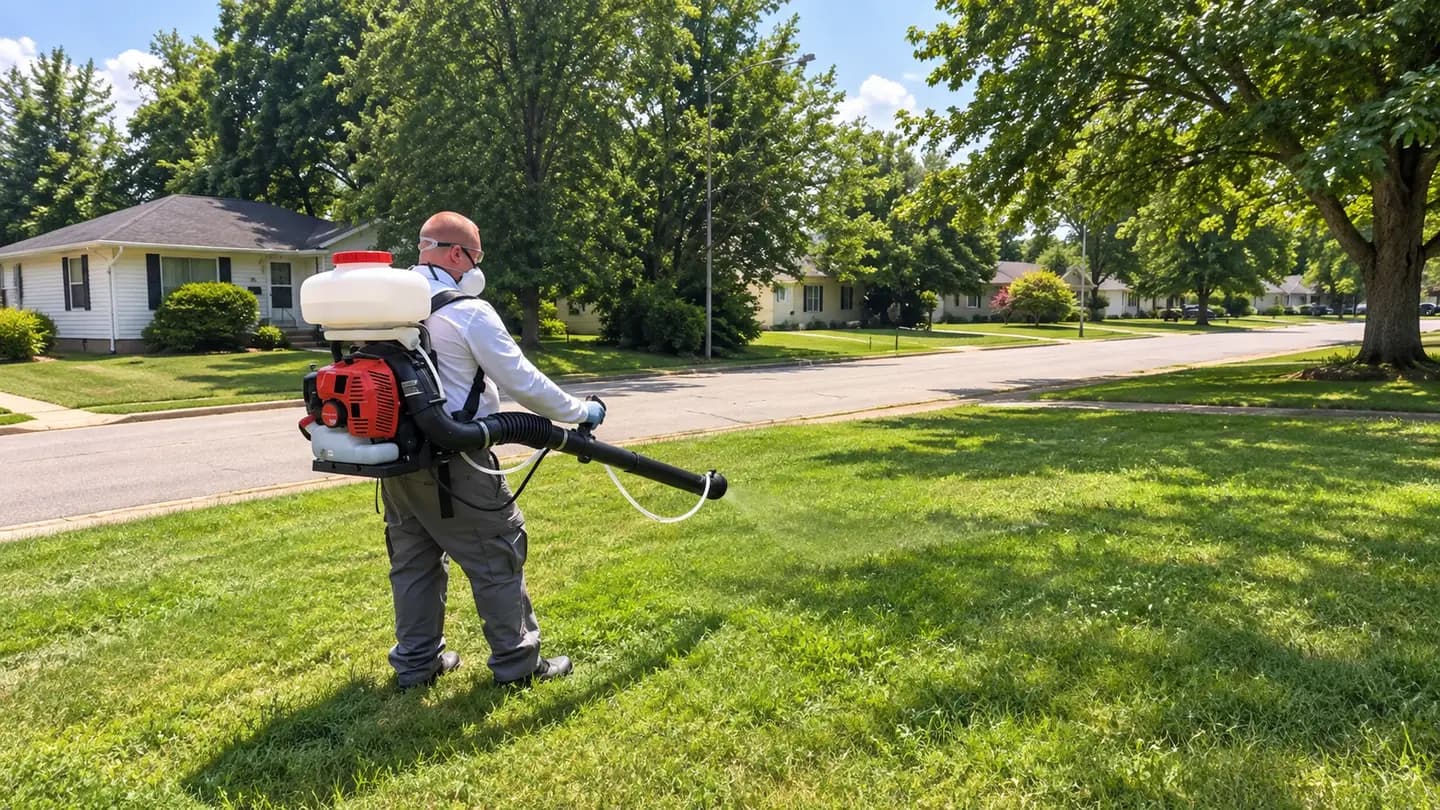
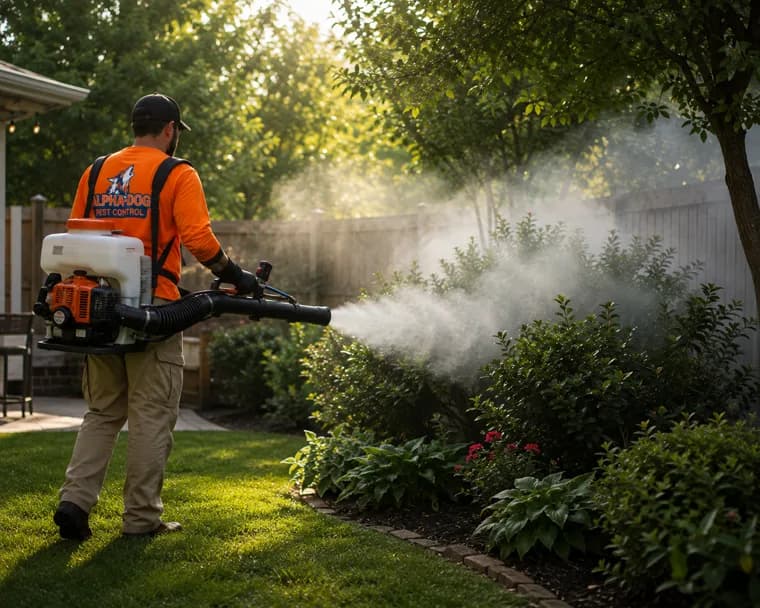
Shaded, moist ground. Under decks and porches. Mulch beds and the strip along the foundation. We skip the sun-baked open lawn, because fleas do not persist there and treating it would be for show.
- 5
5. Work the tick zones.
Ticks hold different ground than fleas. We work the woodline edge, the leaf litter, the brush lines, and the tall-grass transition where the mowed yard gives way to cover.
- 6
6. Return on a timed follow-up.
We set the return against the hatch, not a round number on the calendar, then walk the same ground and confirm it is clear.
- 7
We work with your vet, not over them.
Whatever your dog or cat is already on stays the plan. We take the house and the property.
Yards, Woodlines, and Outdoor Activity Areas
- 1
What a yard treatment does and does not do.
Treating your yard cuts down what you and your dog pick up on your own ground. The play area, the kennel run, the patio, the lawn you actually walk. That part is real.
- 2
It does not make the woods behind your property safe.
Nobody can hold a treatment line through standing timber, and we do not treat ground we were not hired for. Walk back there and you are in tick habitat again.
- 3
Part of this is yours, and none of it is something you did wrong.
What helps most is plain upkeep: grass kept cut, leaf litter cleared, a mulch or gravel break held between the lawn and the woodline, and the woodpile moved off the fence. Each of those takes cover away from ticks and makes our work hold longer.
- 4
Deer and rodents keep the edge resupplied.
They move along property lines year round and bring ticks back with them. So the woodline is standing work, not a box you check once. The same damp, shaded ground usually feeds mosquitoes, which is why a lot of these yards run mosquito treatments on the same schedule.
The inspection and the quote are both free. Call (812) 401-1028 and we will walk the yard with you before anything is priced.

Pets, Kids, and Treated Areas
- 1
You will know exactly where we treated.
Before we leave, we walk you through it: which rooms inside, which areas outside. Nobody should have to guess where the dog is allowed to lie down.
- 2
We ask that pets and kids stay off treated areas until they dry.
Keep them in another room, or another part of the yard, while that happens.
- 3
Your vet's plan stays your vet's plan.
We work around whatever your pet is already on rather than layering onto it. Tell us what that is when we schedule so we can plan the visit around it. We do not supply, recommend, or adjust anything your animal takes.
- 4
Anything about the animal itself goes to your veterinarian.
A bite, a reaction, a question about your pet's health: that is their call, not ours.
What It Costs and the Alpha-Dog Promise
- 1
No flea or tick price is published here, and that is deliberate.
Four things drive the number: your interior square footage, how many pets you have, the size of your yard, and how close the woodline sits. We would rather look than guess.
- 2
Outside market research, not our numbers.
The national guide at pestcontrolpricing.com puts indoor flea spray at $150 to $350 and yard treatment at $75 to $200, and neither figure is an Alpha-Dog quote.
- 3
What we can state as our own.
A one-time general pest visit runs $100 to $300. Residential recurring service starts at $35 a month and runs to $250, driven by home size.
- 4
We look at the job before we put a number on it.
The inspection is free, the quote is free, and you get it in writing.
- 5
The Alpha-Dog Promise on this work is the schedule.
The yard reloads the pet and the pet reloads the house, so protection here is a rhythm rather than a 30-day clock. We keep coming back on a quarterly or monthly plan, and callbacks between those visits are free on that plan.
Callbacks between scheduled visits are free on a quarterly or monthly plan, which is what carries a flea job through the reload from the yard. Call (812) 401-1028 to get on the schedule.
Get a written quote
Tell us what you are seeing. The office will call you back with the next step.
Where We Work
We work out of two locations, Evansville and Newburgh, and serve homeowners and businesses across the Evansville metro and Southern Indiana:
Common Questions About Fleas and Ticks
How did my indoor cat get fleas?
They rode in. Fleas travel on shoe soles, pant cuffs, and a dog that goes out and comes back, so your cat never had to leave for them to arrive.
Do I need to treat the yard if I already treat the pet?
Yes. The yard keeps reloading the pet. Every trip outside puts your dog back into the same shaded ground where the next batch is waiting.
Why did the fleas come back after two weeks?
That is the next batch hatching. It is expected, not a treatment that failed, and it is why the follow-up is scheduled instead of optional.
How long does it take to get rid of them?
Longer than one treatment, because the hatch has to be met. We work it until they are clear, and the warranty runs 30 days from the point they are confirmed gone.
Is it safe for my dog?
Keep him off treated areas until they dry, and we will tell you where those are. Anything about the dog himself is a question for your vet.
Do tick treatments work if my yard backs up to woods?
For the yard you use, yes. For the woods, no. The edge where your grass meets the brush is the strip we work.
Set Up the First Visit
The inspection is free and so is the quote. We walk the pet areas, the interior, and the yard edges, then put it in writing. We are small enough that the owner still shows up, because a small, family-owned team answers for its own work.
Alpha-Dog Pest Control is licensed and insured, with locations in Evansville and Newburgh, serving the area since 2020. Fleas and ticks come back from the yard, so this work runs on a plan rather than a warranty. Callbacks between scheduled visits are free on a quarterly or monthly plan.
Call (812) 401-1028 and we will set up the first visit.