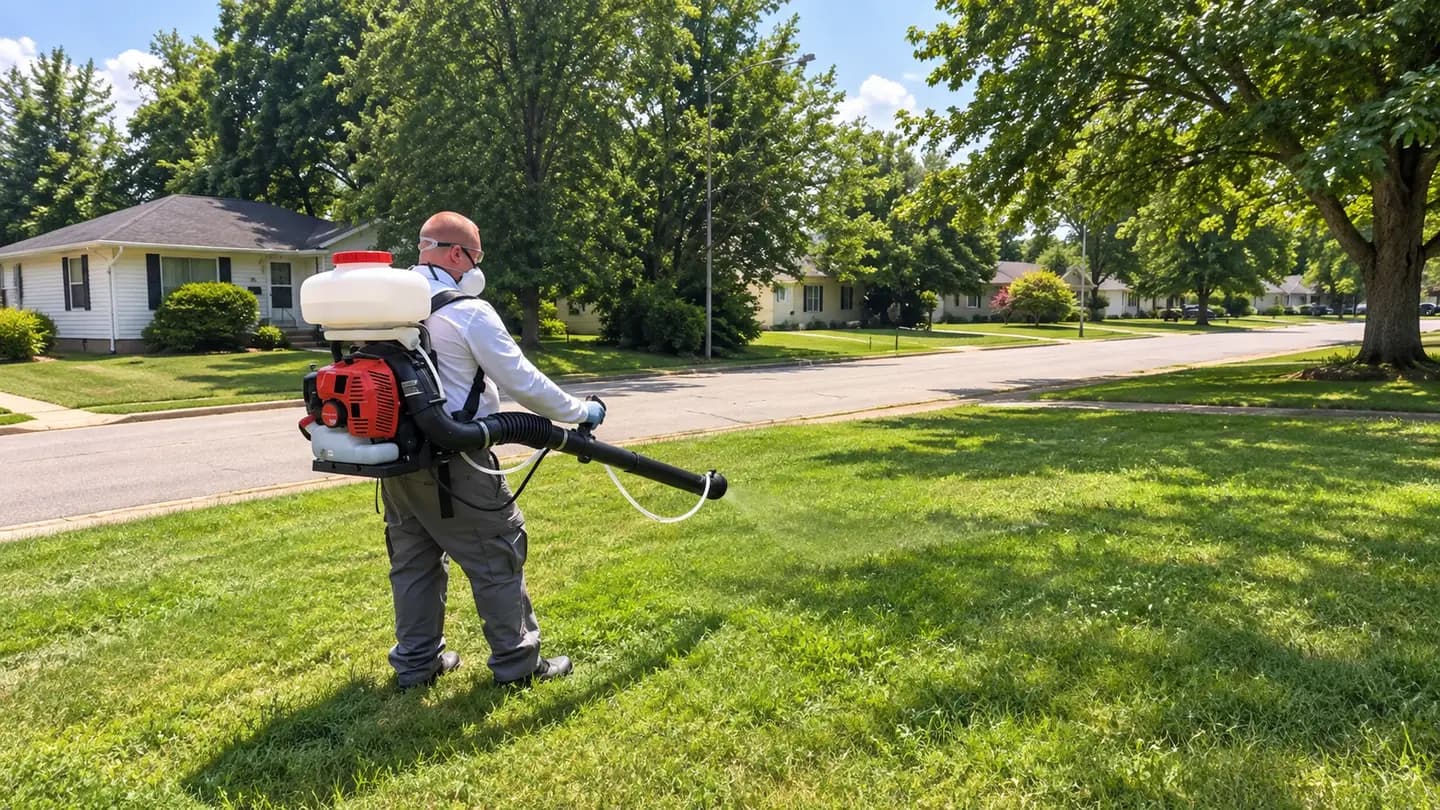
Technician treating a shaded yard edge with a backpack sprayer.

Alpha-Dog Pest Control

Mosquito, Flea & Tick Control

Mosquito and tick control targets where the pests actually sit. Adult mosquitoes rest in shade through the heat of the day, so treatment goes to those resting sites rather than the open lawn, while ticks hold the woodline edge and leaf litter. Treatment repeats through the season because the yard refills from outside. Fleas take three fronts at once: the pet, the interior, and the yard. The protection out here is the schedule rather than a warranty, and callbacks between scheduled visits are free on a quarterly or monthly plan.Mosquito and tick control targets where the pests actually sit.

Licensed and insured
Licensed and insuredIndiana 7A and 7B licensedFree inspection and written quote

What You Are Actually Dealing With

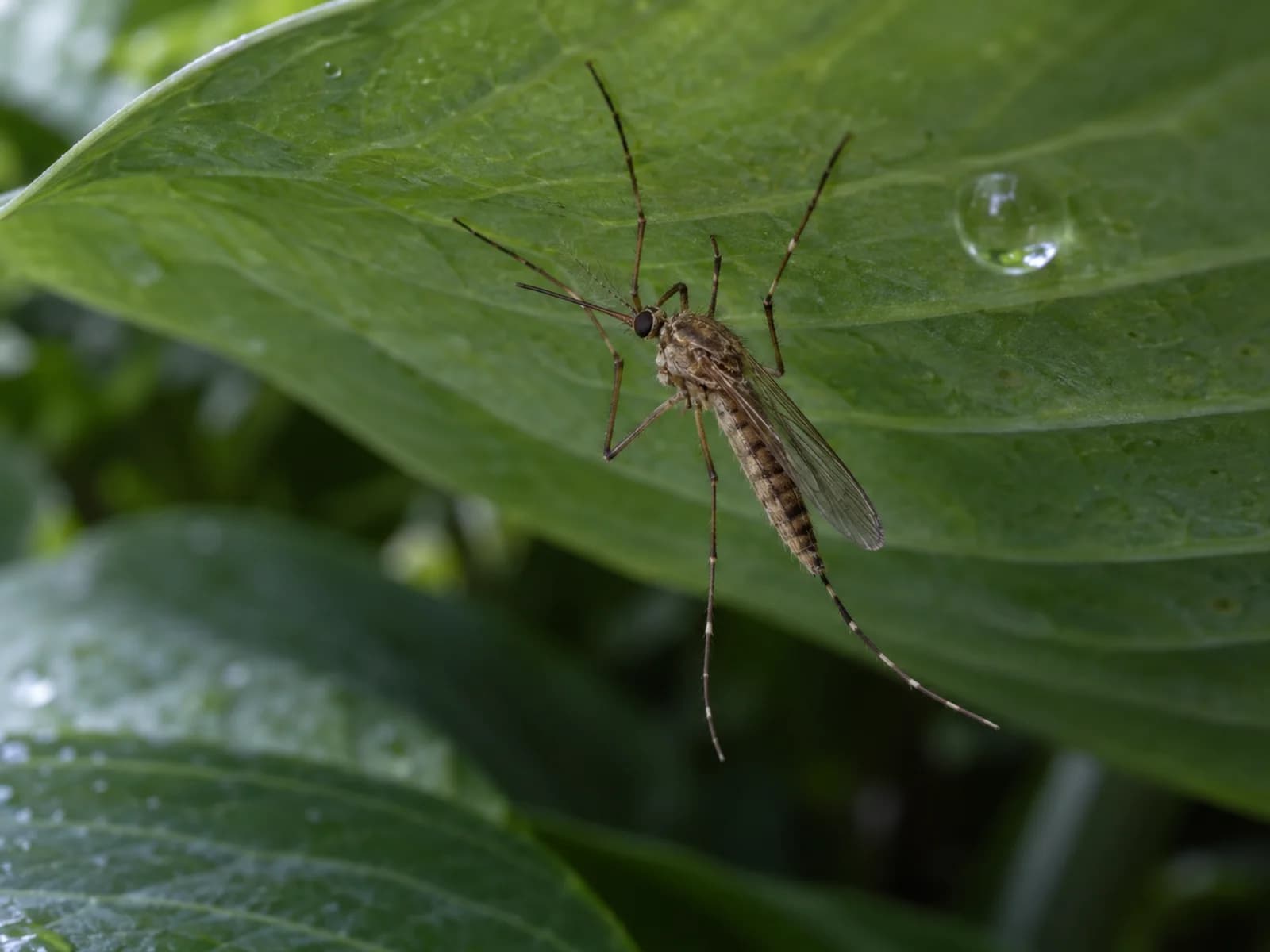
Culex mosquito resting on the underside of a shaded hosta leaf.
  1. 1

    Three pests share this page for one reason.

    All three come at the house from the yard, not from inside the walls. That is where the similarity stops. Each lives differently, and each needs a different treatment. A generic yard spray treats them as one pest, and that is why it falls short on all three.

  2. 2

    Mosquitoes are a water problem and a shade problem at the same time.

    They breed in standing water, and the adults spend the hot part of the day resting in shade, under decks and inside dense shrubs. Fogging the open lawn puts product where the mosquitoes are not. Knowing your own mosquito breeding sites is half the work.

  3. 3

    Fleas cycle between three places.

    The pet carries them, the carpet and the furniture hold them, and the yard keeps feeding them back inside. Most of a flea population is eggs and larvae you never see. What turns up on the pet is a fraction of what is on the property, which is the short version of the flea and tick risk for homes with pets.

  4. 4

    Ticks do not cycle like either one.

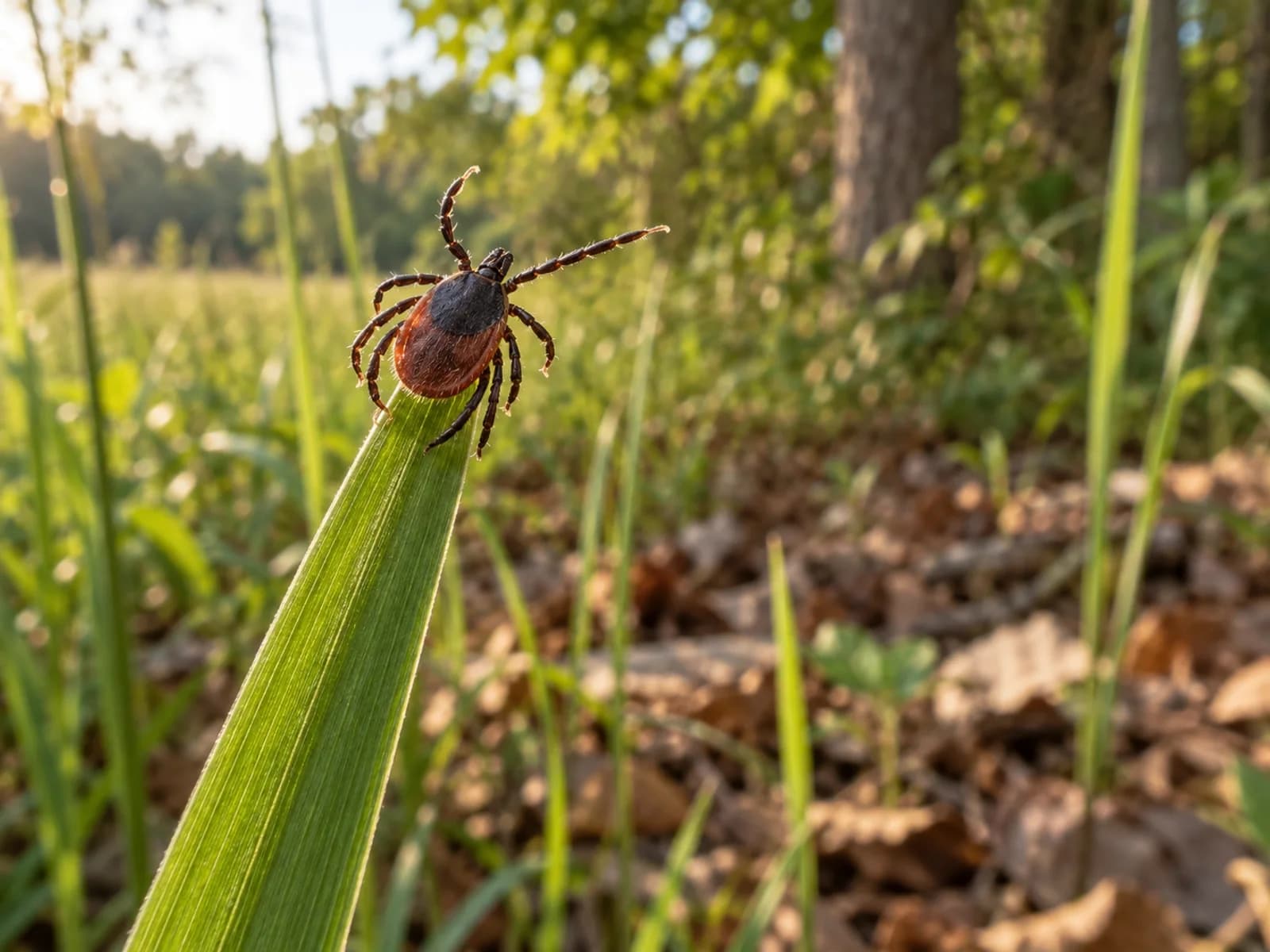
    They wait. They sit in tall grass, brush, and the first few feet of a woodline, holding on until something walks past. They do not fly to you and they do not breed in your carpet. Treatment goes to the edges of a property, not the middle.

  5. 5

    Ticks in Indiana can carry disease.

    Lyme disease and Rocky Mountain spotted fever both occur here. Cutting back tick habitat around the house cuts down the encounters. Your doctor is the right person for anything past that.

Signs It Is Time to Treat

The yard tells you before the calendar does. You are outside at six in the evening, not ten at night, and you are already getting bitten. That shift in timing says more than the number of bites. Walk a fence line or brush past a shrub row and a small cloud lifts off ahead of you. That is a resting population, not a few strays drifting through.

The dog is the other early warning. The scratching picks up. Part the coat and you find flea dirt, dark specks down against the skin. Bites show up around your own ankles, because that is the height fleas work at. Ticks turn up after mowing, or on the dog when it comes in off the woodline. One tick is reason enough to look hard at the property edge. Our answer on how to get rid of fleas in the yard covers that side of it.

Pressure tends to spike about a week after heavy rain. The pattern is steady enough to plan around, and we lay out the timing in why mosquitoes are worse after rain.

Call while it is still small. Holding a population down is easier than knocking one back. Early treatment does less work for a better result.

Blacklegged tick questing on a grass blade at a woodline edge.

The Mistake Behind Most Failed Treatments

  1. 1

    Every store-bought fix makes the same mistake.

    It goes after the adults you can see, in the places that are easy to reach. Each of these three keeps its reserves somewhere else. Mosquitoes hold in shaded resting spots and in breeding water. Fleas wait as eggs and pupae down in carpet fibers and shaded soil. Ticks sit out at the property edge, resupplied by deer and rodent traffic. Kill what you can see and the reserve refills the gap. That is the argument this whole page runs on, and it lands the same way on a hose-end bottle and on a one-time service call.

  2. 2

    So the mechanism is knockdown plus return.

    Take out what is present, then come back before the reserve matures into the next round of adults. We work to roughly a three-week cycle through the season. That is the interval we set for our own routes, based on what we watch rebuild here, not a rule we hold anyone else to. The key is consistency. The page on how yard treatments work covers what that looks like on the ground, and how often to spray for mosquitoes answers the timing question straight.

  3. 3

    A one-time visit still has its place.

    Ahead of a graduation party or a wedding, it is honest work and we book it gladly. It buys you a window. It does not buy you a season, and we will tell you that before we quote it.

How Alpha-Dog Treats a Property

We walk the property before we treat anything. The water, the shade, and the edge sit differently on every lot. Half an acre backing onto woods is not the same job as a fenced yard in town. The walk decides where the treatment goes, and that decision is most of the difference between work that holds and work that does not.

Same visit, three different targets. A mosquito job is a water and shade job. We look at what is holding water, then work the shaded places the adults sit through the heat of the day. A flea job runs inside and out at once, the rooms your pet actually uses and the shaded ground it lies on outside, coordinated with whatever your vet already has the pet on. A tick job is an edge job: the tall grass, the brush line, the first several feet of woodline. A generic yard spray addresses one of those three at best, and often not the one you called about.

The step by step belongs on the service pages. Our mosquito treatments page walks a full visit in order, from the standing water check through the foliage work. Our flea and tick control page does the same for the interior and the shaded yard, including the prep we ask for before we arrive. Start there when you want to know exactly what the crew does on your property.

Wooded lots get their own answer. Ticks keep arriving on the deer and rodent traffic that crosses the ground next door, so an edge is maintained rather than finished. We lay out that approach in tick prevention around yards and woodlines, and we take the fair question, do tick treatments work around wooded yards, straight on.

We come back through the season rather than treating once, and the same small crew sees your property each time. Zach still tries to take the first visit on a new property himself, because he wants to see the yard with his own eyes before we scope the work. When he cannot get there, it is Dylan or one of the crew, working the same way.

Technician treating the shaded undersides of a shrub bed with a backpack mister in an Evansville yard.

Timing and the Season in Southern Indiana

  1. 1

    Start before the population builds, not after the first bad weekend.

    Most people call us the Monday after a cookout got ruined. By then the numbers are up, and the first month of work goes to catching down. Starting earlier gives the program a lower baseline to hold.

  2. 2

    Two other Evansville companies publish the local window.

    McMahon Exterminating says area treatments start in March and April and generally run through October. Yikes Pest Control puts the season at March to October. We work April into October on most properties and start in March when spring comes on warm. We go deeper on seasonal timing for mosquito treatments in Indiana, and we answer when mosquito treatments should start in Indiana plainly.

  3. 3

    Here is the part of a three-week cycle nobody explains.

    Pressure is lowest right after we treat and climbs as the next visit nears. Week three usually feels busier outside than week one. That is the shape of the service, not a failure of it, and we would rather you hear it from us than notice it yourself in August. Three weeks is the interval we work to. Heavy rain resets breeding sites, and pressure tends to follow about a week behind it.

  4. 4

    Ticks are the part most people have backwards.

    They are out earlier in spring and later in fall than the mosquito season suggests, and a warm stretch in winter can put them back on the edge of the yard. A tick problem is not only a July problem.

Pets, Kids, and Yard Safety

We tell you exactly where we treated. Before we leave, you get a plain rundown of the areas we covered and the areas we left alone. Nobody should have to guess.

Keep pets and kids off treated foliage until it dries. That is the request, and it is the whole request. You will know which plants and edges to watch, because we just told you.

We work around your vet, not over the top of them. If your dog is already on something the veterinarian prescribed, say so and we plan around it instead of doubling up. Questions about the animal itself belong with your vet, not with us.

Pollinators come up a lot here. We work around flowering plants and keep the application off blooms. Point out the beds you care about and we plan the route before the sprayer comes out.

That is the short version. The longer one lives here: are mosquito treatments safe for pets.

What It Costs and How We Quote It

We do not publish a mosquito, flea, or tick price, and that is deliberate. Four things drive the number: yard size, tree cover, standing water sources, and how much woodline you back up to. A quarter-acre lot in a subdivision and a two-acre place against the timber are different jobs. Posting a number we would have to change after seeing your property is not honesty.

Outside numbers give you a sense of the market. Yikes Pest Control, a competitor here in Evansville, publishes monthly mosquito service starting at $65, or $399 for a year paid up front. LawnStarter, a national service, puts mosquito treatment between $109 and $198, with most homeowners near $134. Those are their figures, not an Alpha-Dog quote. For the fuller picture, we walk through how much mosquito treatments cost.

Our own confirmed numbers: a one-time general pest visit runs $100 to $300, and residential recurring service starts at $35 a month, with most homes landing between $35 and $250 depending on size.

We look, then we quote in writing. The inspection is free and so is the quote. Commercial properties are priced by unit count plus technician time and drive time, never by square footage.

The Alpha-Dog Promise on this work is the schedule, not a warranty. Mosquitoes, fleas and ticks reload from the yard and from the animals that cross it, so a 30-day clock would be measuring the wrong thing. We keep coming back on a quarterly or monthly plan, and callbacks between those visits are free on that plan.

Work in the field

Backpack sprayer treating the shaded resting sites under dense shrubs.
Technician treating a shaded fence line with people and pets kept away.

Free

Inspection before the written quote

Written

Scope and price before work starts

Local

A small team serving the Evansville area

Since 2020

Serving Southern Indiana

Where We Work

We work out of two locations, Evansville and Newburgh, and serve homeowners and businesses across the Evansville metro and Southern Indiana:

EvansvilleVanderburgh County
NewburghWarrick County
BoonvilleWarrick County
Mount VernonPosey County
PrincetonGibson County
JasperDubois County
WashingtonDaviess County
Santa ClausSpencer County
BloomingtonMonroe County
Henderson, KYHenderson County, KY

Common Questions About Mosquitoes, Fleas, and Ticks

Why are mosquitoes so bad after it rains?

Rain fills every container and low spot at once. A saucer, a clogged gutter, a fold in a tarp, a rut in the yard. The whole property starts breeding on the same clock.

Will one treatment last all summer?

No, and anyone promising that is overselling. These pests keep producing all season, so we work it on a schedule.

Is it safe for my dog?

Keep your dog off what we treated until it dries. We point out those areas before we leave. Anything about your dog itself is a question for your vet.

How did my indoor cat get fleas?

Fleas hitched a ride inside. Shoe soles, pant cuffs, a bag set down in the grass, a dog that goes out and comes back. Your cat never had to leave.

Do I need to treat the yard if I already treat the pet?

Yes, because the yard keeps reloading the pet. Eggs and young fleas sit in the shaded ground where your dog lies down, so every trip outside starts it over.

Do tick treatments work if my yard backs up to woods?

Yes for the yard you use, no for the woods themselves. We work the lawn, the paths, and the edge strip where the two meet, because that is where ticks cross.

Let Us Look at the Property

Start with a free inspection. We walk the property for standing water, shaded resting spots, and the brushy edge of the yard. Then we quote the job in writing, before anything gets treated.

We are small enough that the owner still shows up. Nobody cares as much as he does.

Alpha-Dog is licensed and insured, with locations in Evansville and Newburgh, serving the area since 2020. Seasonal pests come back with the season, so this work runs on a plan rather than a warranty. Callbacks between scheduled visits are free on a quarterly or monthly plan.

Call (812) 401-1028 and tell us what you are seeing.

Get a free quoteCall (812) 401-1028Call now

Free QuoteCall NowPhones answered after hours