Reference guide

Indiana Pest Identification Guide

Most people land on a page like this holding a jar, a photo, or a piece of chewed trim. This guide covers the pests most common to Southern Indiana homes and businesses: what each one looks like and how big it gets, what its droppings look like, the damage it leaves behind, and where you typically find it. Two calls matter most here, and both are answered below: telling a termite from a flying ant, and telling mouse droppings from rat droppings. Cost questions belong on our pest control cost guide, and timing questions on the Indiana pest calendar.

Bed Bugs

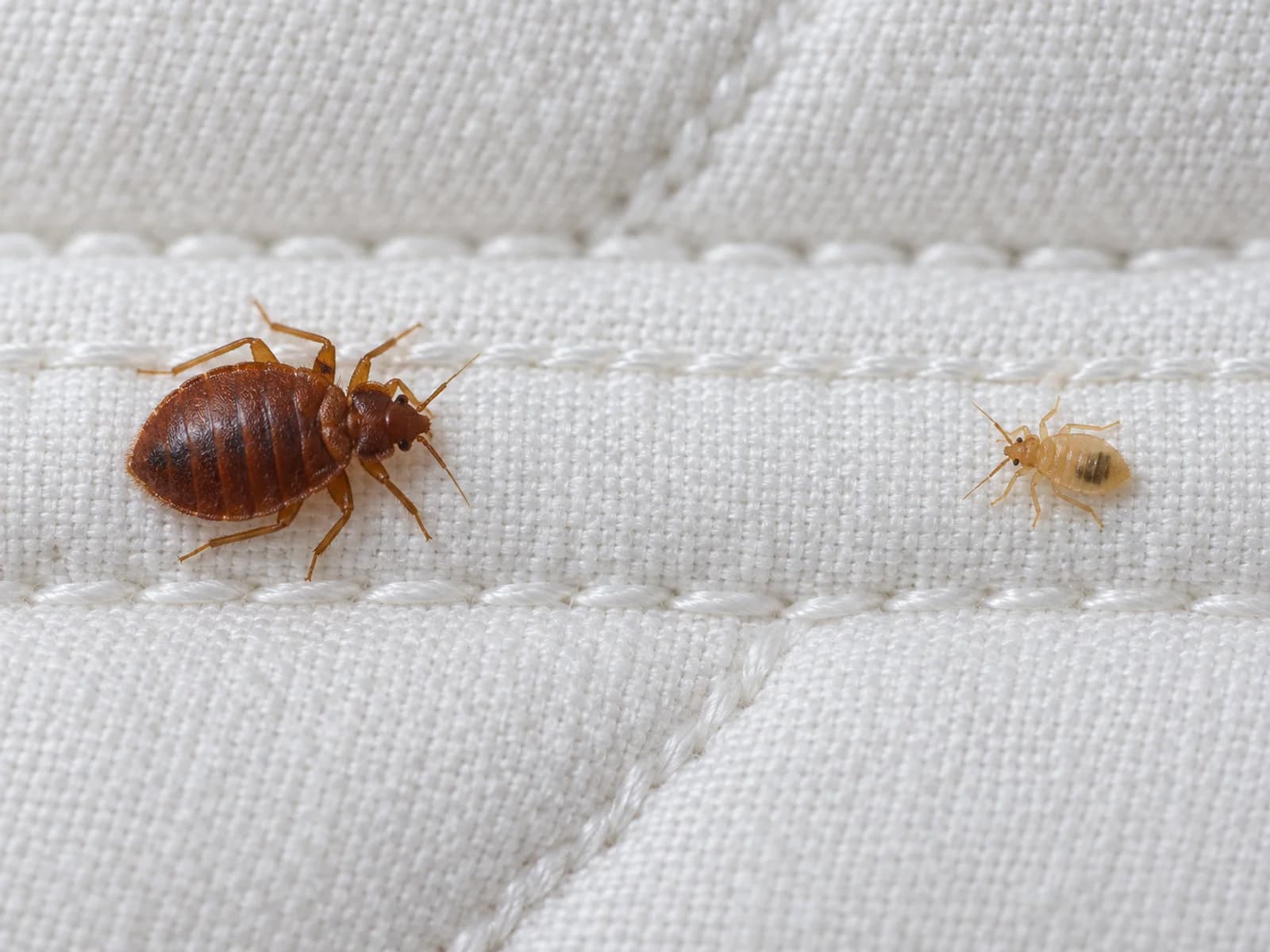
Adult bed bug and a smaller pale nymph on a mattress seam.

Appearance and size. About the size of an apple seed, reddish-brown, oval, and flat from top to bottom when unfed. After a feeding they swell and darken. Young ones run smaller and paler.

Droppings and signs. Fecal spots, rust-brown to black and roughly the size of an ink dot, usually clustered along mattress seams and box spring edges. Small blood smears on sheets. Cast skins near hiding spots, which are shed shells holding the shape of the insect.

Where you find them. Mattress seams, box spring, headboard, baseboards, luggage and luggage racks, and the seams of upholstered furniture. They are hitchhikers, and they do not care whether a house is clean.

About the bites. Small welts, often in a line or a loose cluster. Reactions vary from person to person, so bites alone are not a reliable way to identify them. The spotting, the skins, and the insects themselves are the better evidence.

If you think you have bed bugs, do not wait. Start with our bed bug control and heat treatment.
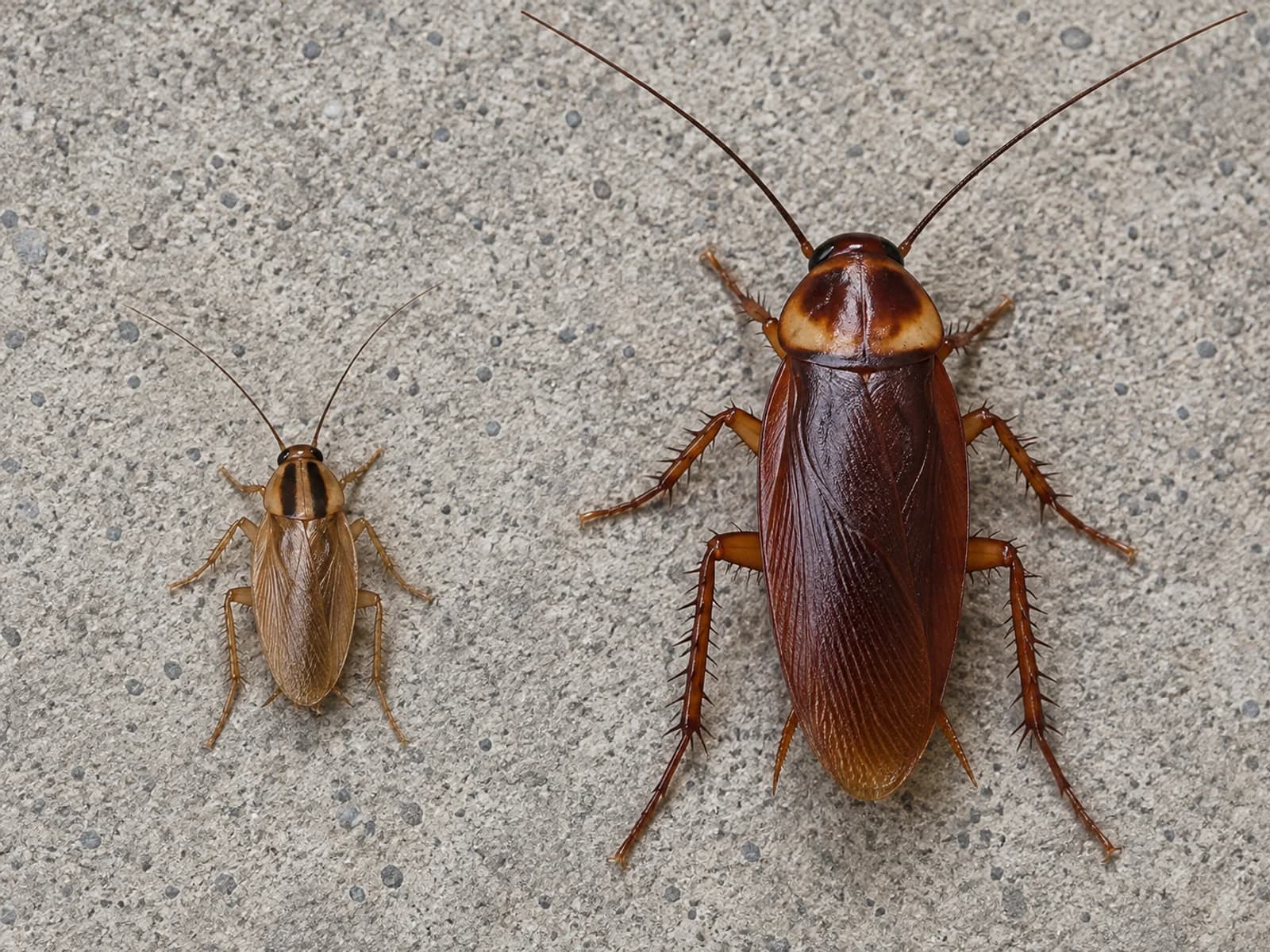
Cockroaches: German vs. American

German cockroach and larger reddish American cockroach side by side on a concrete floor.

German cockroach. Light tan to brown, about half to five eighths of an inch, with two dark parallel stripes running down the back behind the head. Found where food, warmth, and moisture sit close together, so kitchens and bathrooms. It reproduces quickly.

American cockroach. Reddish-brown, an inch and a half to two inches, the largest common house roach in this area. Found in basements, drains, and crawl spaces, associated with damp dark utility areas rather than kitchens.

Droppings. Small pepper-like or coffee-ground-like specks along travel paths, under sinks, and in cabinet corners.

Other signs. Smear marks along walls on frequently traveled routes, a musty oily odor where numbers are high, and egg cases in hidden corners.

What a sighting means. Roaches follow moisture and food access, not housekeeping. Seeing one says something about the building, not about you. Spraying a few roaches does not fix the problem.

Common Ants, Including Carpenter Ants

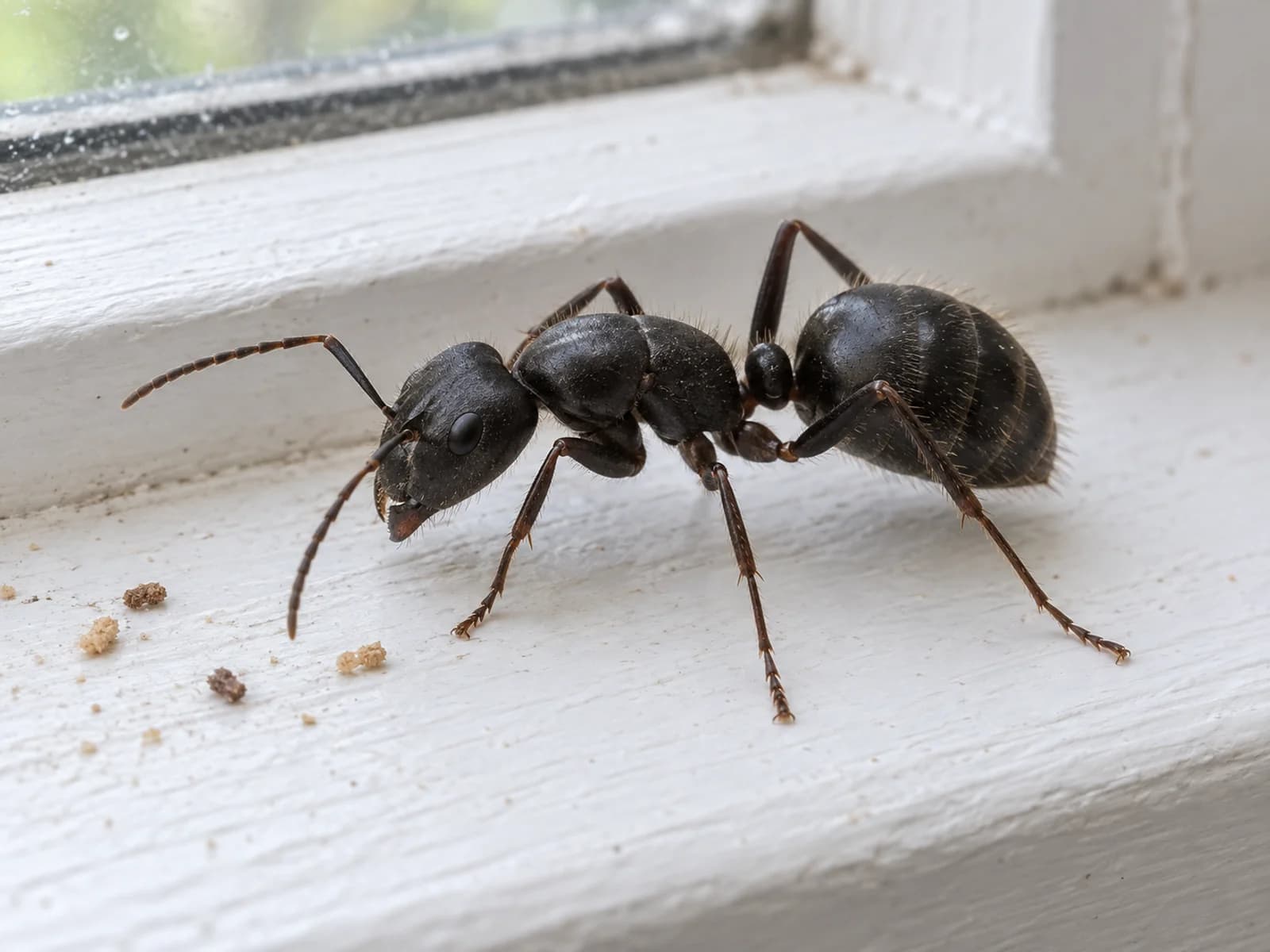
Large black carpenter ant on a painted window sill.

Odorous house ants. Small, about an eighth of an inch, dark brown to black. They trail unevenly rather than in a straight line, and crushed ones smell like rotten coconut. They nest in wall voids and under slabs, and show up in kitchens after the year's first warm rain.

Carpenter ants. Larger, roughly a quarter to half an inch, black or black and red. They do not eat wood. They excavate it to build nests, which is the single most misunderstood thing about them. Look for them near moisture-damaged wood: window sills, deck ledgers, and around leaks.

Carpenter ant damage. Smooth, clean galleries, not soil-lined, and small piles of frass pushed out near the nest entrance, fine sawdust mixed with insect body parts. No mud tubes, no soil.

Telling them from termites. That absence of mud tubes and soil is the fastest way to rule out termites, and the section below runs the full side-by-side comparison. For ants already inside, start with our ant control.

Termites vs. Flying Ants: The Single Most Useful Call You Can Make

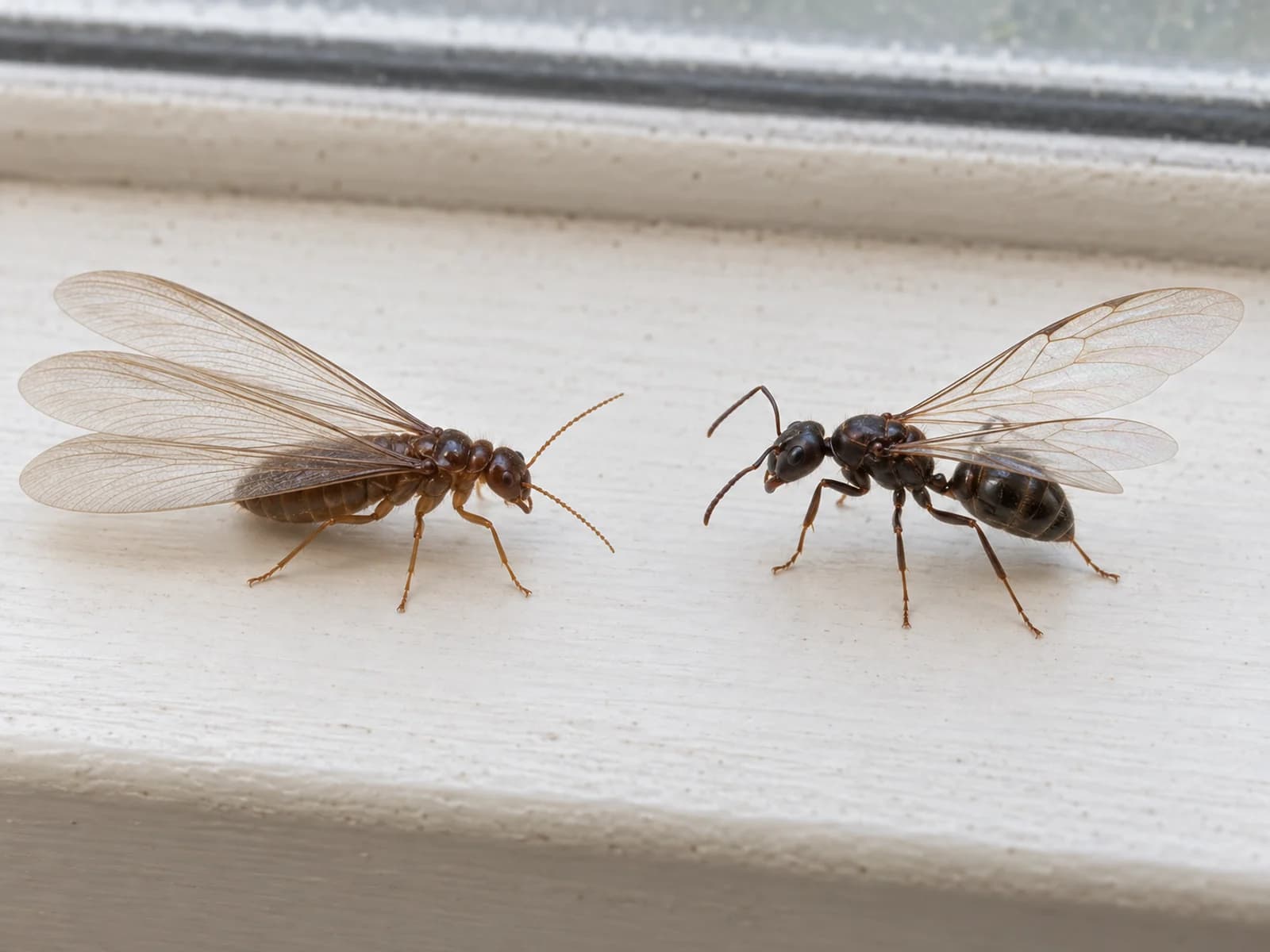
Termite swarmer with equal-length wings beside a winged ant with unequal wings.

Check the antennae first. Termite swarmers have straight antennae. Flying ants have bent, elbowed antennae. That is the fastest single tell.

Then the wings. A termite swarmer has four wings of roughly equal length and shape, all extending past the body. A flying ant has two pairs of unequal length, the front pair noticeably longer.

Then the waist. A termite is thick and uniform, with no visible pinch. A flying ant has a narrow, distinctly pinched waist.

When and where you see them counts too. The termite swarmers here are subterranean termites. They typically emerge in spring, often on warm afternoons after rain, low to the ground or against the foundation, and they drop their wings quickly, leaving small piles nearby. Carpenter ant swarmers appear at various points in the year, including indoors in late summer.

Some signs belong to termites alone. Mud tubes, pencil-width and earth-colored, built from soil and saliva, run up foundations, crawl-space joists, and sill plates. Damaged wood sounds hollow when tapped, and the galleries inside run with the grain and are lined with soil, unlike the clean galleries carpenter ants leave. There is more in the complete guide to identifying termite damage.

The two swarms look alike across a room and call for completely different work. If you think you have termites, do not wait. Start with termite control and prevention.

Mice vs. Rats: The Droppings Comparison

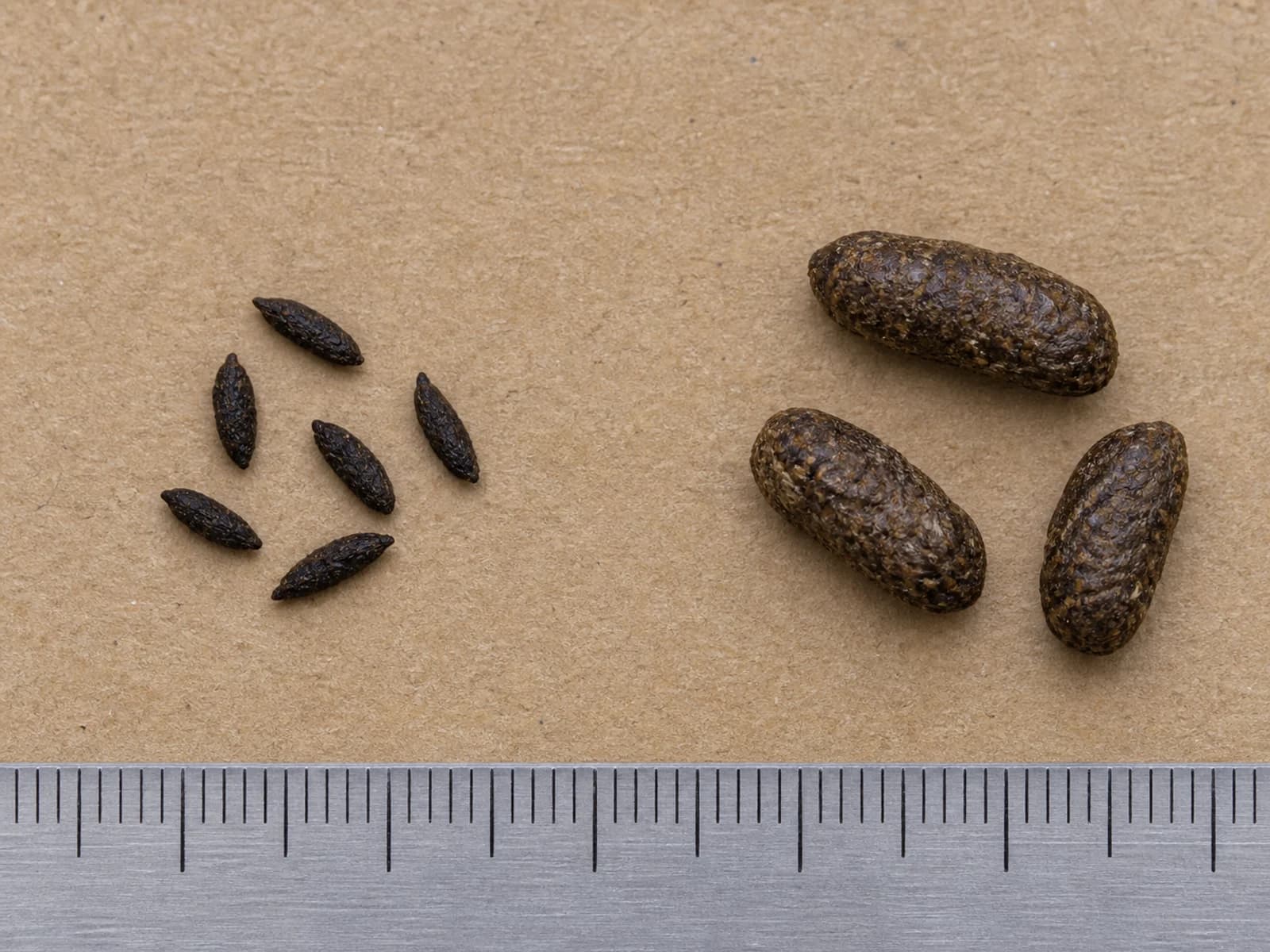
Small rice-sized mouse droppings beside larger blunt rat droppings on cardboard.

Droppings are the clearest tell. Mouse droppings run about an eighth to a quarter inch, rod-shaped with pointed ends, usually scattered in small clusters near food, inside cabinets, and behind appliances. Rat droppings run about a half to three quarters of an inch, capsule-shaped with blunt rounded ends, and collect in larger piles along walls and travel routes.

Entry gaps. A mouse gets through a gap of about one quarter inch, roughly the width of a pencil. A rat needs a gap closer to the size of a quarter. Openings that look far too small to matter are usually enough for one or the other.

Gnaw marks. Mice leave small, neat marks. Rats leave larger, more ragged ones.

Rub marks. Dark grease marks along baseboards and beams come from rats travelling the same route night after night.

Sound and nesting material. Both scratch inside walls and attics, most noticeable at night, and both nest in shredded paper, fabric, or insulation tucked into hidden corners.

Where they turn up. Mice show up more often higher in a building: attics, wall voids, and upper cabinets. Rats stay lower, near foundations and in crawl spaces. The two can share one structure, so finding one does not rule out the other.

If you think you have mice or rats, do not wait. Start with rodent control and exclusion.

Spiders, Including Brown Recluse

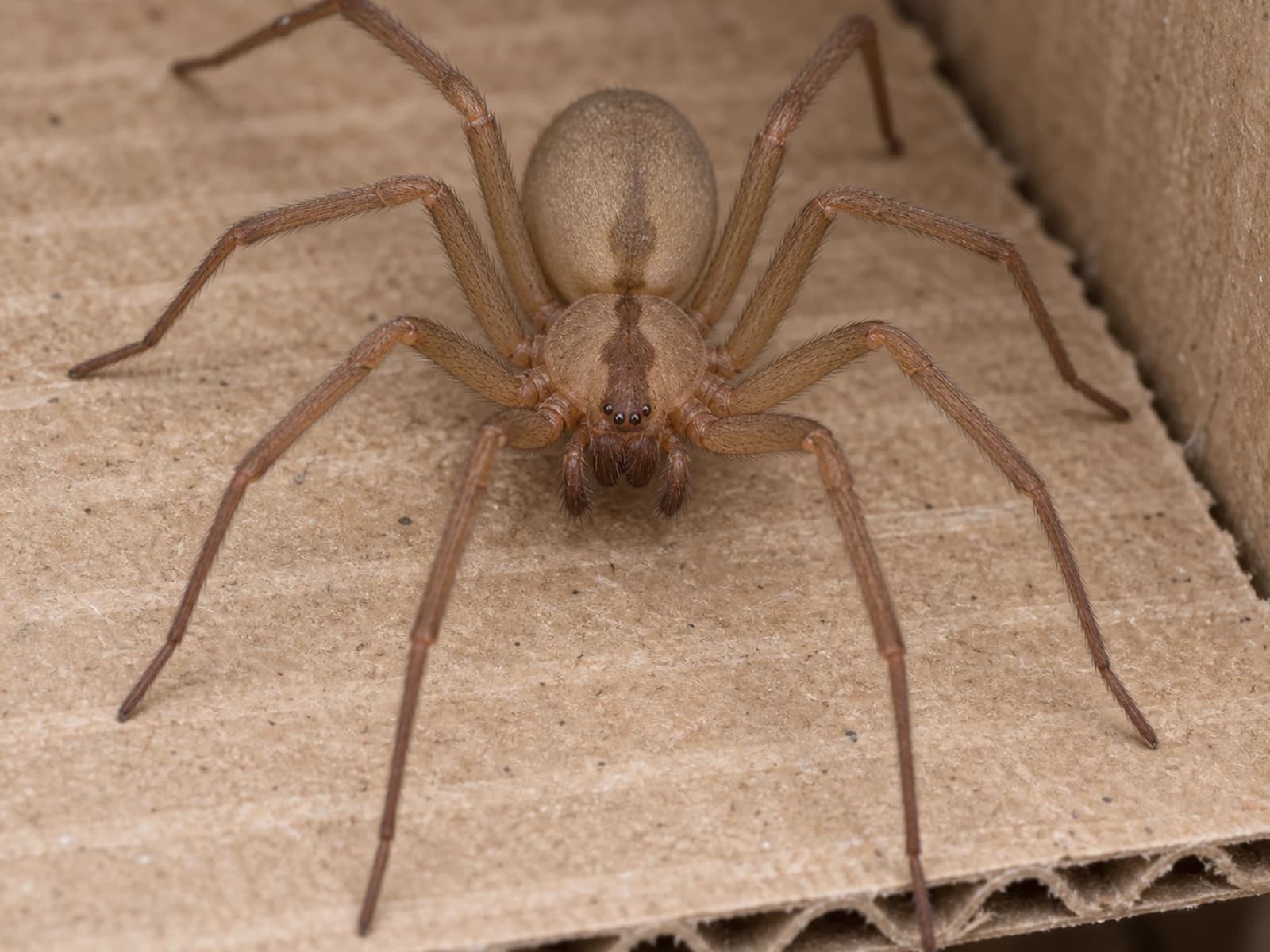
Brown recluse spider showing the violin marking on its back, on cardboard.

Common house spiders are small, tan to brown, and the ones building cobwebs in corners, basements, and window frames. They are not a health concern, and they sit with the household lineup in the full guide to common house pests.

Brown recluse identification rests on two features. The body is uniform tan to dark brown, no banding on the legs. A violin-shaped marking sits behind the head, but it is often not distinct at a glance, a weaker tell than people assume. The eyes are the reliable feature: six, in three pairs, where common house spiders have eight. Confirming that takes close inspection or magnification. Recluse spiders favor dry, undisturbed places: closets, garages, storage boxes, and behind or under furniture.

Southern Indiana sits inside the brown recluse's documented general range, though populations are localized and bites are uncommon. Most suspected recluse bites reported to physicians turn out to be something else. A bite you are worried about is a question for a doctor rather than for us.

Does seeing one brown recluse mean there are more? Not necessarily. One spider is one spider. Repeated sightings in the same spot are worth a look.

Mosquitoes, Fleas, and Ticks

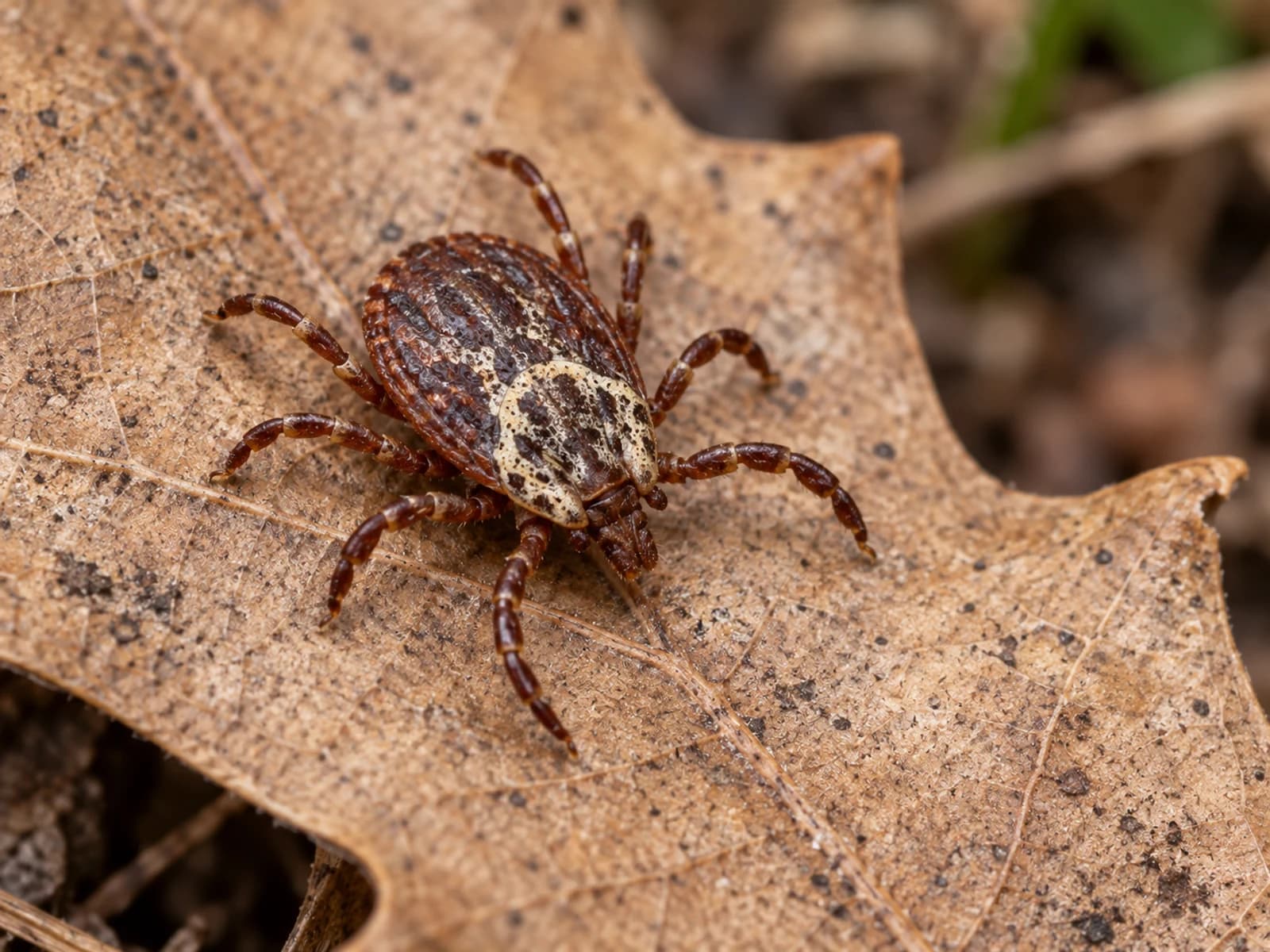
Adult American dog tick with mottled shield on a fallen leaf.

Mosquitoes are small and thin-bodied with long legs, and they stay near standing water and shaded, humid corners of a yard. The breeding cycle runs roughly three weeks, which is why yard pressure returns when standing water is left sitting. Emptying buckets, tarps, plant saucers, and clogged gutters takes those places away.

Fleas are tiny, dark brown to reddish-brown, and flattened side to side, and they jump rather than fly. The signs usually arrive before the insect does: a pet scratching more than usual, small dark specks known as flea dirt in pet bedding, and bites clustered around the ankles.

Ticks are flat and oval, brown to reddish-brown, and easier to spot once they have attached and begun feeding, which rounds and darkens the body. They wait along yard edges, tall grass, and tree lines rather than out in mowed turf. Ticks can carry disease, so anything health-related is a question for a doctor rather than for us.

All three are yard-driven, which is why they are handled together under mosquito, flea, and tick control.

Wasps and hornets are the one group not to test yourself. Call (812) 401-1028 and let a technician look.

Stinging Insects

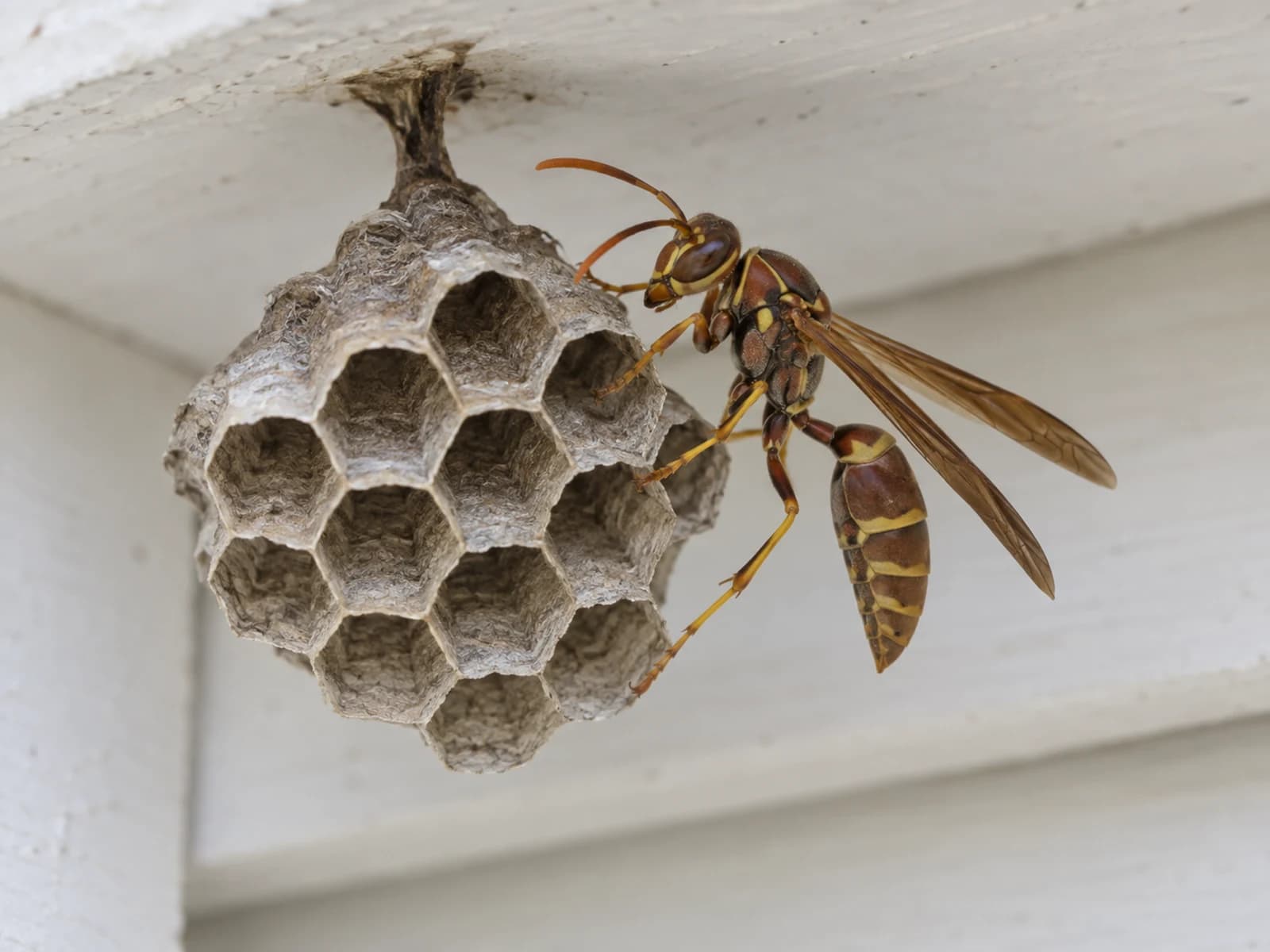
Paper wasp on an open-cell nest under a house eave.

Paper wasps have a slender body, a narrow waist, and long legs that dangle in flight. Their nests are open and umbrella-shaped, usually tucked under eaves, railings, and porch ceilings.

Yellow jackets are shorter and stockier than paper wasps, with bold yellow and black banding. They often nest in the ground or inside wall voids, and they are quicker to defend a disturbed nest than paper wasps are.

Honeybees are fuzzy and rounder, and away from the hive they generally leave people alone. Callers often assume any stinging insect is a wasp. A honeybee is not a pest control problem.

Nest location is the practical trigger. A nest near an entryway, under an eave, or in a high-traffic outdoor area is the reason to make a call.

Photos work. Call (812) 401-1028 or send one over, and a technician who works this area will tell you what you are looking at.

Using This Guide for Your Home or Business

The same calls apply at a restaurant, apartment building, or office, with higher stakes. German roaches in a commercial kitchen, droppings in a warehouse, and termite versus flying ant on an older property all use the signs above.

The honest note: facility and property managers often skip identification and report the pest straight away, which is usually the right call. Knowing the difference still helps set expectations for our commercial pest control programs.

Bring us what you found and we will tell you what it is. The inspection is free and we publish our prices, so the quote will not be a surprise. Call (812) 401-1028.

Common Identification Questions

Is this a termite or a flying ant?

Check the antennae first. Straight means termite, bent at an elbow means flying ant. That one look sorts it in seconds. The comparison above covers wings and waist.

How do I tell mouse droppings from rat droppings apart?

Look at the ends. Pointed means mouse, blunt and rounded means rat. Size can mislead, because a young rat's droppings overlap a large mouse's, so trust the ends.

Does seeing one brown recluse mean there are more in my house?

Not necessarily. One spider is one spider, and a single sighting tells you little. What would change the answer is a pattern, repeated sightings in the same undisturbed spot.

What do bed bug bites actually look like?

Small welts, often in a line or cluster, though reactions vary enough that bites settle nothing. The mattress evidence does not vary that way, so we go by the spotting and the cast skins.

Do German roaches mean my house is dirty?

No. Moisture and food access draw roaches into any home, spotless ones included. They also ride in on cardboard and grocery boxes, so a clean kitchen is not immunity.

How do I tell a wasp from a bee?

Wasps look slender and smooth, honeybees fuzzy and rounder. The difference is practical, not just naming. A honeybee foraging away from its hive is not a pest control problem.

Zach Krietemeyer, owner of Alpha-Dog Pest Control.

Zach Krietemeyer

Owner

Bring Us What You Found

Photos and descriptions get you most of the way. When something warrants a response, the next step is a look at the actual place, not a guess from a picture.

Termite versus flying ant, mouse versus rat. Those two calls matter most, and this page covers both in detail.

If you think you have one, don't wait. Call (812) 401-1028 and describe what you found, or send the photo. Alpha-Dog Pest Control has worked Evansville since 2020, from Evansville and Newburgh.

Get a free quoteCall (812) 401-1028Call now

Free QuoteCall NowPhones answered after hours