Mud tubes: the clearest early sign
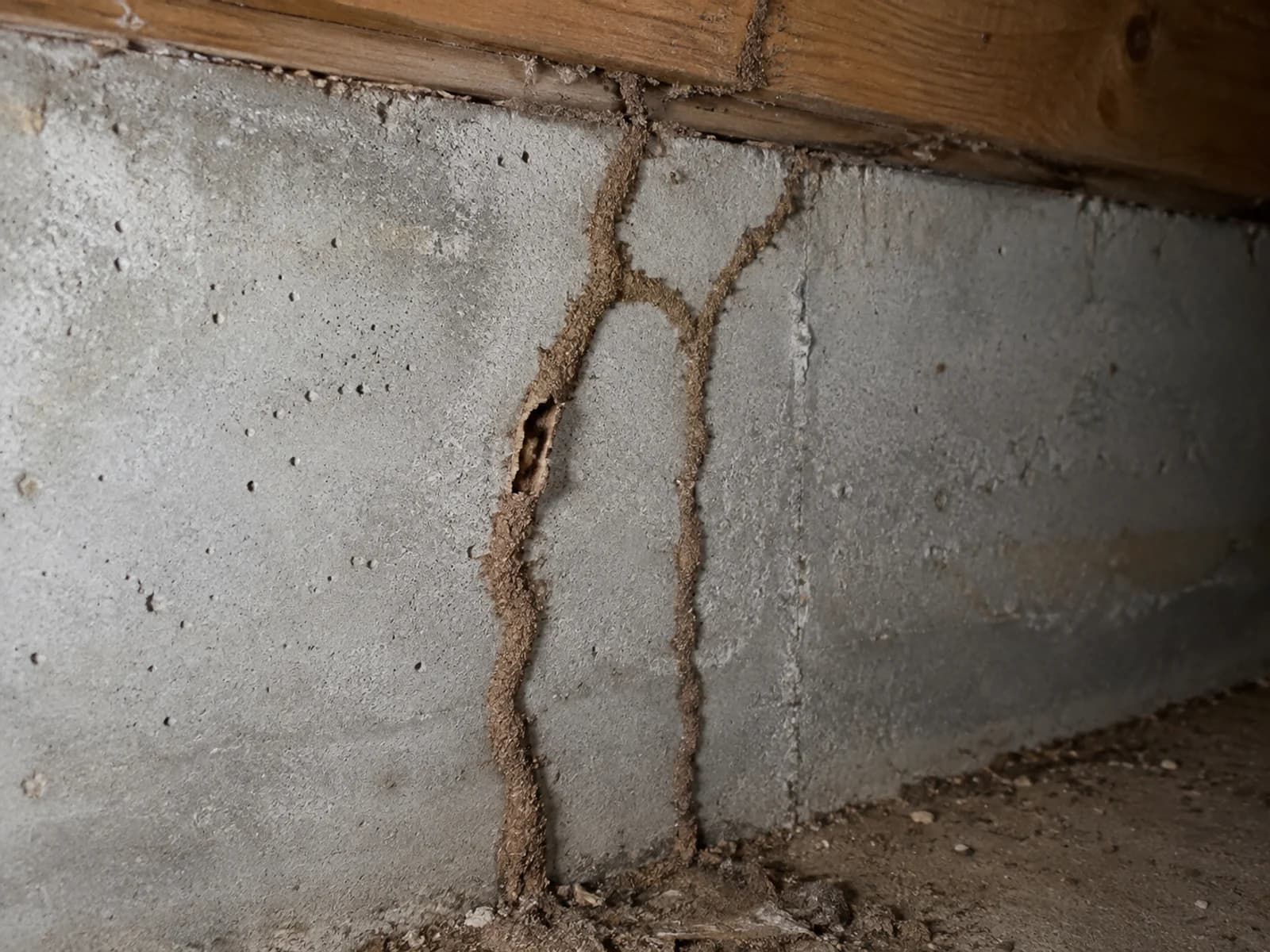
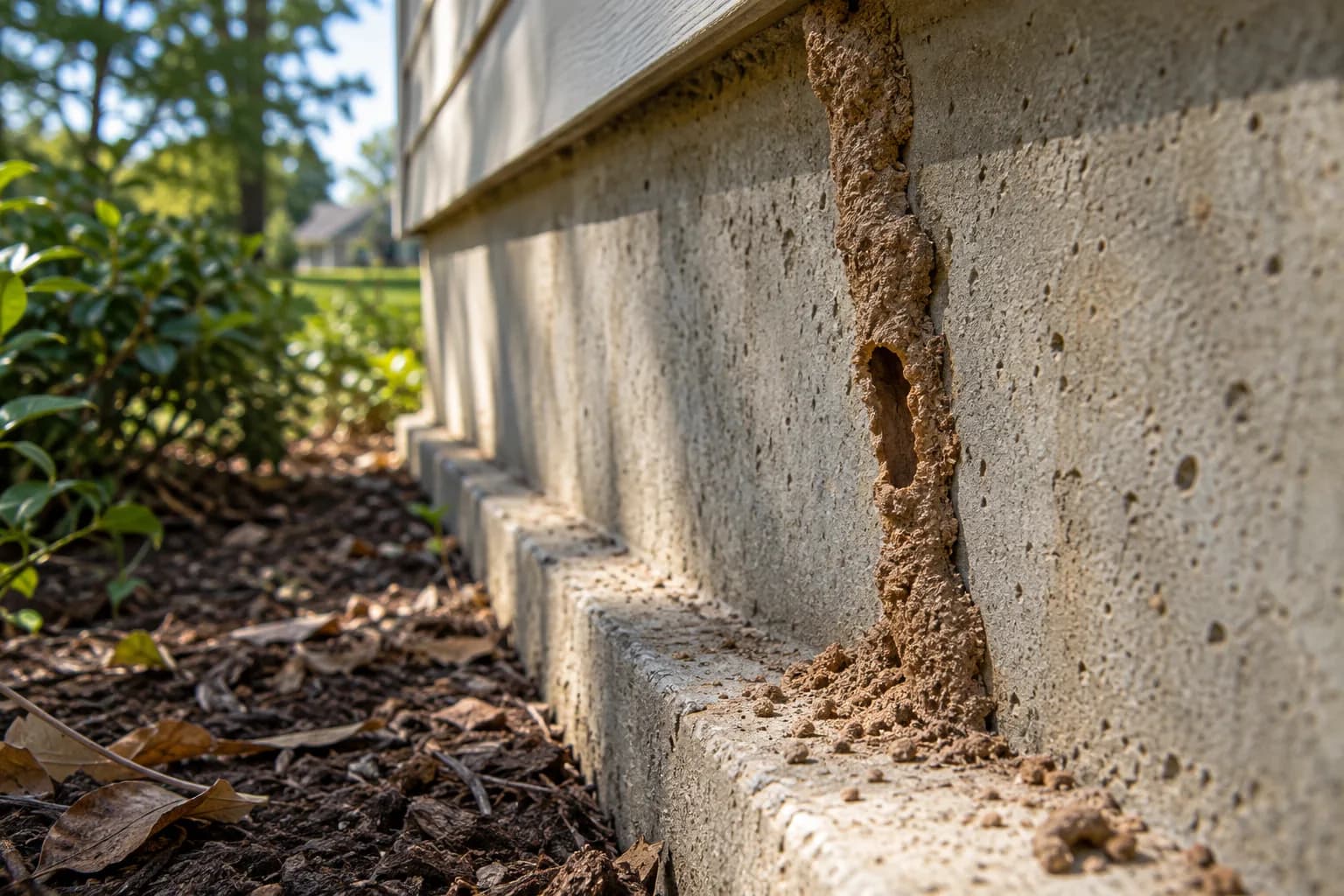
A mud tube looks like a pencil-width line of dried dirt running up a wall. Earth-colored, slightly rough, roughly 1/4 inch to about 1 inch across. Termites build them from soil packed together with saliva. The material sets hard enough to hold its shape but crumbles under a fingernail.
Here is the part most homeowners never get told: the tube exists because the termite cannot survive the trip without it. Eastern subterranean termites live in the soil, not in your wood. They dry out fast in open air. So they build a covered highway that keeps their own humidity around them while they travel between the colony below ground and the wood above it. Purdue Extension entomologists and Mississippi State Extension both describe the tube the same way, as a shelter tube. Without that cover they will not cross open concrete.
That is also why tubes show up where they do. Look up foundation walls and piers, on the exterior and the interior. Check crawl-space joists and sill plates. Check the inside face of block walls in a basement. Indoors, tubes hide behind baseboards and in the seam where trim meets the floor.
Southern Indiana gives them a lot to work with. Crawl spaces and block basements are common here, and the soil under them stays damp most of the year. That moisture is exactly what subterranean termites in Indiana need.
Take a flashlight into the crawl space. Run the beam along the top of the foundation wall where it meets the wood. Tubes stand out against poured concrete once you know the shape.